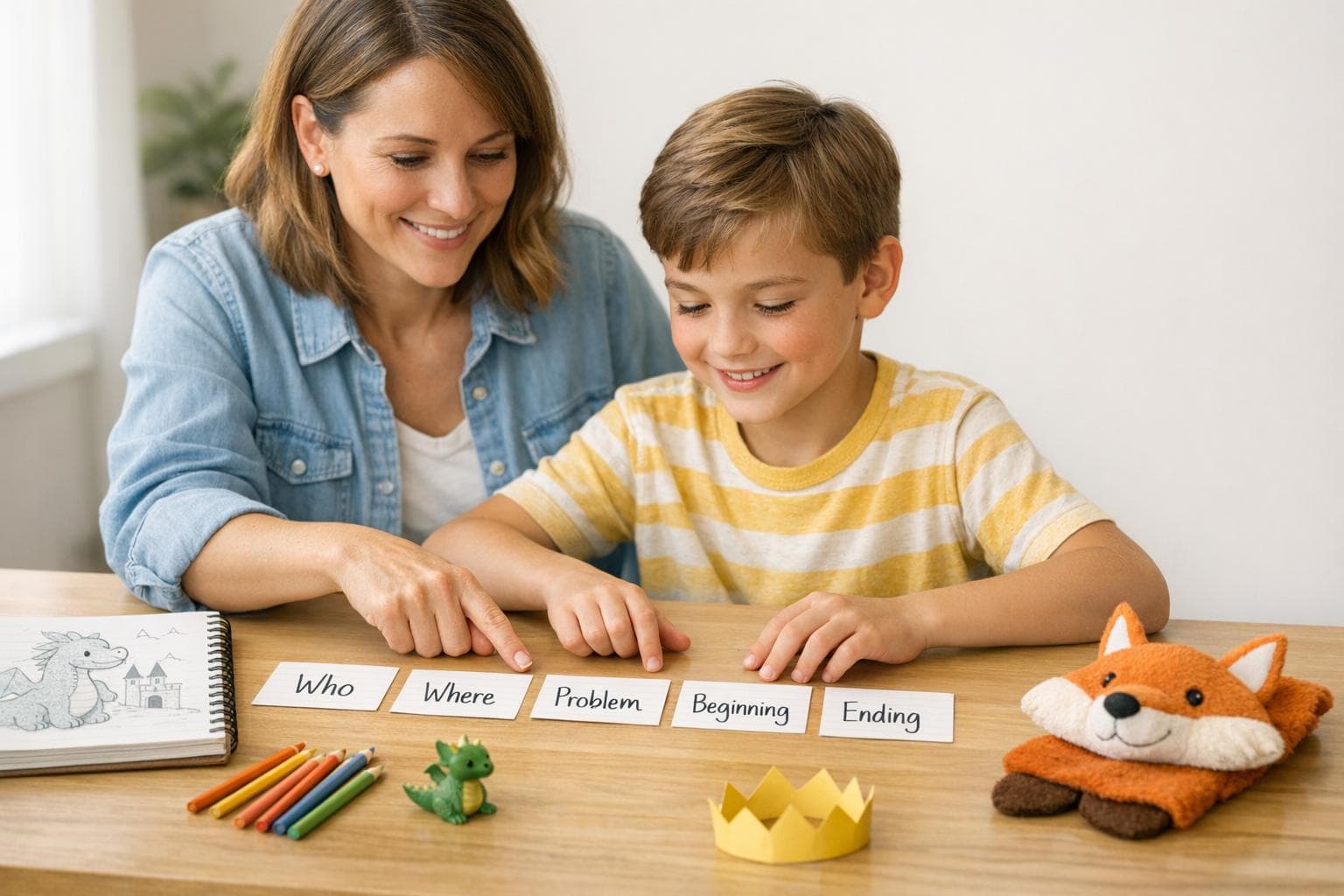
How to Help Kids Create Original Stories
When kids create stories, they’re doing more than just having fun - they’re practicing skills like problem-solving, communication, and organizing ideas. Storytelling helps them explore emotions, expand vocabulary, and even improve memory. To make the process enjoyable and engaging, here’s a quick breakdown of how to guide your child in crafting their own stories:
- Start with Prompts: Use questions like, “What if you woke up with wings?” or try fun challenges like combining three random objects into a story. Everyday experiences or dreams also make great starting points.
- Teach Story Basics: Focus on three elements - characters, setting, and plot. Help them develop characters with personality, describe settings using senses, and map out simple plots with a clear beginning, middle, and end.
- Make It Interactive: Add props, toys, or drawings to bring stories to life. Take turns adding to the story as a group or practice telling stories out loud to build confidence.
- Encourage Sharing: Create simple storybooks, host family reading nights, or explore digital tools like Kidooki to publish or share their work.
The key is to celebrate their ideas and effort while offering gentle feedback. Focus on the process, not perfection, and watch their storytelling abilities grow.
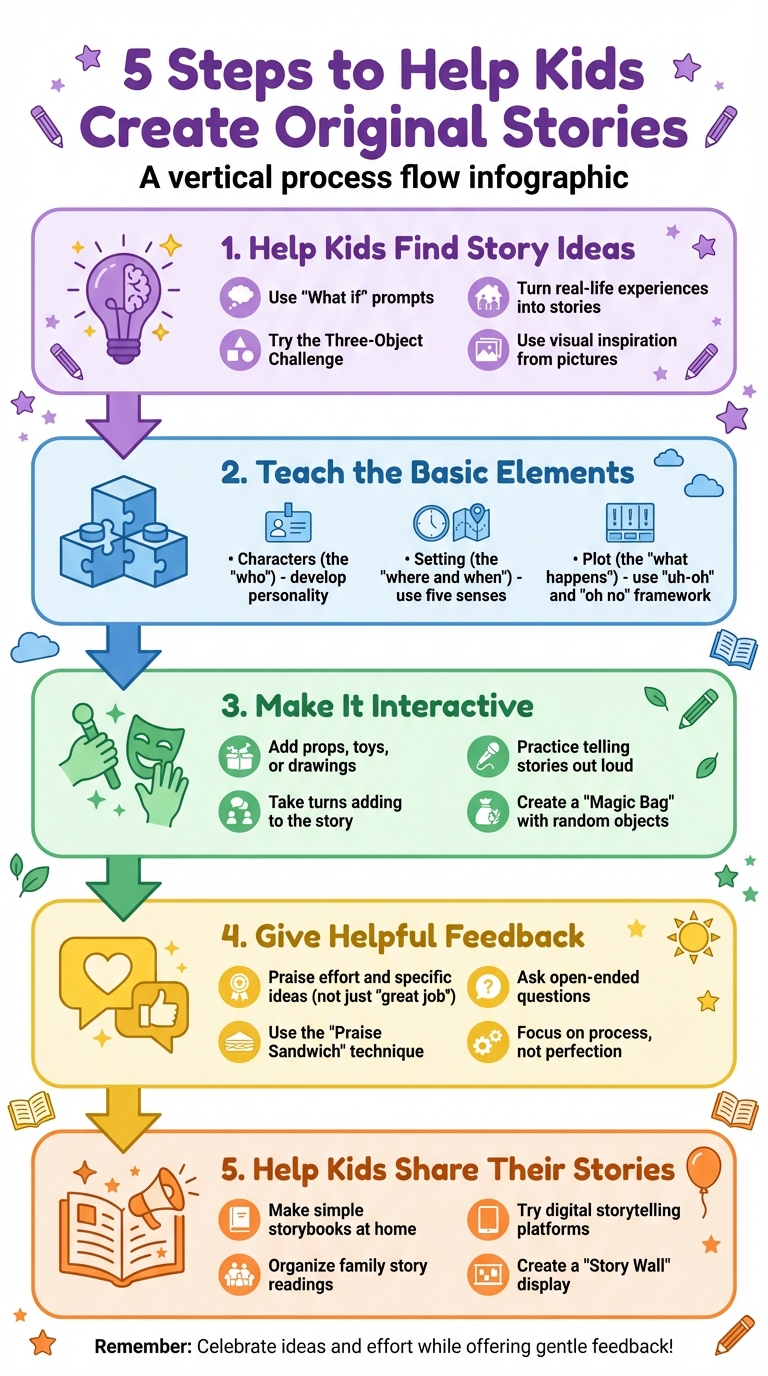
5-Step Guide to Help Kids Create Original Stories
Author& Illustrator Arree Chung Shares How Kids Can Transform Ideas Into Stories | Crayola Learning
sbb-itb-d6d0693
Step 1: Help Kids Find Story Ideas
Starting a story can feel overwhelming, especially when staring at a blank page. Kids often find it tough to come up with ideas on their own, which is why giving them a little push can make a huge difference. The aim isn’t to tell them what to write but to spark their creativity and get their ideas flowing.
Use Prompts to Spark Ideas
One of the simplest ways to get kids thinking is by using "What if" questions. These open-ended prompts are great for unlocking their imagination without boxing them into a single direction. For instance, ask, “What if you woke up with wings?” or “What if no one could see or hear you for a whole day?”. These kinds of questions are flexible and fun.
Another fun method is the Three-Object Challenge. Pick three random, unrelated items - like a dragon, the ocean, and a volcano - and ask them to create a story that ties them all together. You can also encourage character spin-offs from their favorite books or movies. For example, ask, “What happened to Cinderella after the wedding?” or “What if characters from two different stories met?”. Building on familiar stories can help kids feel more confident before they dive into creating their own worlds.
For kids who are more visual, try flipping through magazines or picture books. Let them pick an image that catches their attention and use it as a starting point for their story. Dreams can also be a goldmine for story ideas - ask them to describe a recent dream in detail, focusing on the colors, emotions, and events they remember.
Everyday moments can also be transformed into story material, making the process feel natural.
Turn Real-Life Experiences into Stories
While prompts are great for sparking the imagination, real-life experiences can offer a solid framework for storytelling. Everyday moments - like the first day of school, losing a tooth, or a fun trip to the park - already have the essential elements of a story: a beginning, middle, and end. These personal milestones are often emotionally meaningful, making them easier to grow into full narratives.
Encourage kids to notice and expand on the details around them. During a walk or a car ride, point out something interesting and ask questions like, “Why do you think that house has purple shutters? What if a wizard lived there?”. This practice helps them see the potential for stories in everyday life. You can also suggest they imagine themselves in familiar settings, like “The Day I Met the Three Bears” or “My Adventure in Wonderland”. Making themselves the hero of the story can make the process even more exciting.
As Gale McCreary, Founder of SpeechStory, explains:
"Writing stories with your children can be both entertaining and educational. Creating a tale can help your child to develop her language skills, organize her thoughts, and practice writing".
Step 2: Teach the Basic Elements of a Story
Now it’s time to help kids turn their ideas into actual stories. At the core of every story are three basic elements: characters (the "who"), setting (the "where and when"), and plot (the "what happens"). These elements give children a clear structure to work with while sparking their creativity. Stephanie Yamkovenko, Group Manager at Khan Academy, puts it perfectly:
"Storytelling is an essential part of a child's development. It allows them to explore their imagination, develop language skills, and improve their understanding of the world around them".
Let’s dive into these building blocks, starting with characters.
Develop Characters with Personality
Characters are the beating heart of any story. They can be anything - people, animals, robots, or even completely made-up creatures like a "Doggophant" (half-dog, half-elephant). To make characters feel alive, encourage kids to think about their personalities and motivations. Ask questions like, “What challenges do they face?”, “How do they feel about others?”, or “What problem are they trying to solve?”.
A fun way to explore this is with a character interview. Have your child answer questions as if they are the character. For example: “What’s your biggest fear?” or “What makes you happiest?” This exercise helps kids create characters with depth and quirks, like a princess who lives in a cave or a bath-loving cat.
Build Settings with Details
The setting is more than just a place - it sets the scene and mood for the story. A creepy old mansion feels completely different from a sunny beach, right?. Encourage kids to use the five senses to make their settings vivid. Ask questions like, “What does the magical forest smell like?” or “What sounds can you hear in this bustling city?”.
You can also use stories you read together as examples. During bedtime, pause and ask, “Where is this happening?” This helps kids notice how settings shape the stories they enjoy.
Structure a Simple Plot
Once the characters and setting are ready, it’s time to map out the plot - the sequence of events that drive the story forward. A simple way to teach this is with the "uh-oh" and "oh no" framework. Start with the character’s normal life (the calm before the storm). Then, something changes - uh-oh! The character tries to fix the problem, but things get worse - oh no! Finally, they solve the problem, and the story wraps up.
Another helpful tool is the five-box sketch method. Have your child draw or write one major event in each box to see the story’s flow. Remind them that every story needs some kind of conflict - it’s what keeps the action moving.
Step 3: Make Storytelling Interactive and Enjoyable
Once kids have grasped the basics of storytelling, it’s time to make the experience more dynamic and immersive. These interactive techniques can help children fully engage with their stories, turning the act of storytelling into a multi-sensory adventure. By combining structure with creativity, stories take on a life of their own. As PlanetSpark beautifully puts it:
"A story becomes magical when creativity gets direction".
Here are some practical ways to bring stories to life and make storytelling sessions unforgettable.
Add Props, Toys, or Drawings
Physical objects can make stories more vivid by engaging kids’ senses and helping them connect with the narrative. Props act as visual and tactile cues that anchor the story, making it easier for children to remember details and stay engaged. The best part? You don’t need anything elaborate.
For instance, puppets - whether hand or finger - are great for practicing dialogue and creating unique character voices. Story stones, which are simple flat rocks painted with images like animals, houses, or symbols, can serve as prompts to guide the story. A starter set of 8 to 10 stones is enough to spark creativity. Miniatures or figurines can help set the scene, while everyday items like spoons, towels, or boxes can transform into characters or props with a little imagination.
A fun idea is to create a "Magic Bag" filled with random objects. Let your child pull one out at a key moment to introduce an unexpected twist or new character. Household items can also double as sound effects - a pot can mimic thunder, and a whistle can recreate the wind. Another engaging activity is drawing a simple story map that divides the narrative into the beginning, middle, and end. Props like masks can also help kids express emotions more freely by giving them a sense of "distance" from their own feelings.
Take Turns Adding to the Story
Storytelling doesn’t have to be a solo activity - it can be a collaborative and exciting way to bond as a family. One fun method is circle storytelling, where each person contributes one sentence to build the narrative. You can also use story stones or cubes for turn-taking, letting each participant pick one to continue the tale. To add an element of surprise, fill a mystery bag with random objects and have each person draw one to introduce a plot twist.
As the Scholastic Raise a Reader Blog explains:
"The act of telling stories is a tradition as old as humankind. With their potential to explain historical events, life lessons, beliefs and values, feelings, and emotions, stories can help children better understand the world of human interactions".
Encourage kids to end their turn on a cliffhanger, leaving the next person eager to resolve the tension. For older children, consider writing full pages alternately to create a shared book. The goal is to ensure that everyone feels like an important part of the creative process. Activities like these naturally build confidence and lead to verbal storytelling, giving every child a chance to shine.
Practice Telling Stories Out Loud
Oral storytelling is a great way to develop confidence and improve communication skills. Research suggests that it can foster deeper engagement and even strengthen social connections.
Teacher Jennifer Aycock notes:
"When we're telling stories out loud, you can see the kids engage differently. They listen more intently, and it seems to really spark their imagination".
You can make oral storytelling fun by hosting a "Backward Story Night", where your child becomes the storyteller at bedtime. Round-robin games are another option - one person starts the story, and others take turns continuing it. Alternatively, ask your child to retell a favorite story using toys or puppets. As Professor and Master Storyteller Cathy Miyata explains:
"When you take away the book, there's just the parent and child, focused on one another, interacting and sharing in a unique experience".
Step 4: Give Helpful Feedback
After diving into interactive storytelling, offering thoughtful feedback keeps your child's creative energy alive. Feedback should focus on their effort and creativity, not on achieving perfection. This keeps the storytelling process enjoyable and motivating.
Praise Their Effort and Ideas
Start by highlighting what they’re doing well. Instead of generic comments like "Your story is great", be specific. For example, say, "I love how your character shows bravery and how natural the dialogue feels". This kind of feedback helps them see exactly what they’re excelling at.
Avoid praising fixed traits like "smart" or "talented." Heidi Grant Halvorson, Ph.D., Associate Director of the Motivation Science Center, suggests:
"Praise his actions, not just his abilities. That way, when he runs into trouble later on, he'll remember what helped him to succeed in the past".
Focus on things they can control, like their creative thinking, persistence, or planning. These are skills they can rely on and build upon.
During the creative phase, prioritize their ideas over grammar or technical details. Experts point out that welcoming all ideas - even the quirky ones - encourages kids to experiment without fear of judgment. This creates a safe space for creativity to flourish.
Once you’ve celebrated their strengths, gently introduce ways they can refine their work.
Offer Gentle Suggestions for Improvement
Constructive feedback works best when it’s paired with positive reinforcement. The "Praise Sandwich" technique is a great way to do this: start with a compliment, follow with a suggestion, and end with another positive note. For example:
"Your story's opening really grabs attention! To make the setting even clearer, you could add more details about the surroundings. And I love how your characters interact - it feels so real".
Frame your suggestions as opportunities to experiment rather than corrections. Use phrases like "What if…" or "Consider trying…" to make the process feel fun and exploratory. Open-ended questions like "What does your character want?" or "What challenge are they facing?" can help them think more deeply about their story.
Swati Prasad, an educator and communication trainer, emphasizes:
"Feedback that's actionable gives learners clear, adaptable steps they can take to upgrade their writing".
For example, you might say:
"Your story has such an exciting plot, but the ending feels a little rushed. What if you added a few sentences to show how the characters feel as the story wraps up?".
The aim is to encourage self-reflection and help them develop the ability to assess and improve their own work.
Step 5: Help Kids Share Their Stories
Once your child has created and polished their story, it's time to encourage them to share it. This is more than just a fun activity - it's a way to celebrate their creativity and help them build confidence while honing their communication skills. Sharing their work reinforces the joy of storytelling and highlights its value. Here are some engaging ways to help them showcase their stories:
Make Simple Storybooks at Home
Turning a story into a physical book is a magical experience for kids. It gives them something tangible to hold, revisit, and cherish. You don’t need anything fancy - just some basic supplies like folded paper, stapled booklets, or glued pages. Add special touches like a title page, a dedication, and even an "About the Author" section featuring your child’s photo. For fun, you could include playful "reviews" on the back cover, such as, "A masterpiece! - Grandpa."
For illustrations, let your child’s imagination shine. They can draw pictures, use magazine cutouts, add stickers, or even attach small tactile elements like pressed flowers or buttons. To make the book more durable, consider using cardstock or laminating the pages. This way, their story becomes a lasting keepsake.
As Julia Luckenbill points out:
"A powerful way to interest young children in reading books is to make books about their routines, families, life events and vacations".
Organize Family Story Readings
Why not turn storytelling into a family celebration? Host a Storytime Premiere or Drama Night where your child gets to perform their story using costumes and props. You could even create a "Story Wall" by displaying the pages like an art gallery or set up a mini-library at home with a special shelf for their creations.
Make it even more memorable with themed snacks - bake cookies or decorate a cake inspired by characters from the story. Another idea is to establish a weekly "Backward Story Night", where your child takes charge of bedtime storytelling. This can quickly become a cherished family tradition.
While these hands-on activities are wonderful, digital tools offer exciting ways to expand storytelling beyond the home.
Try Digital Storytelling Platforms
Digital storytelling tools open up a world of creative possibilities. Platforms like StoryJumper allow kids to collaborate and publish their stories for others to enjoy, while Storybird provides professional illustrations to inspire their narratives. For younger children, apps like Little Bird Tales make creating stories, journals, and even podcasts a fun and interactive experience.
Digital formats also make sharing stories with distant family members a breeze. You can email the story, post it on social media, or export it as a PDF for easy printing. Platforms like Kidooki (https://kidooki.com) even offer a library of professionally narrated stories with soothing illustrations, which can inspire your child’s next project and show them how diverse storytelling can be.
When exploring digital platforms, choose one that fits your child’s age and skill level. Many services offer free trials or basic plans, so you can experiment without any pressure to commit. These tools not only make storytelling accessible but also help kids see the endless possibilities of their creativity.
How Kidooki Supports Story Creation

Kidooki (https://kidooki.com) goes beyond physical activities by offering a constant stream of personalized digital stories designed to spark creativity. Every night, it delivers a bedtime story tailored to your child, incorporating their name and interests. This creates a growing library of narratives that can inspire your child’s storytelling abilities. By combining interactive storytelling with a digital platform, Kidooki provides an enriching environment for creative growth.
Using Kidooki Stories as Inspiration
Hearing their name woven into a story can be a powerful experience for children. It validates their experiences and builds confidence in their ability to create stories of their own. With professional narration, these tales come alive through expressive techniques - like distinct voices for characters, suspenseful whispers, or dramatic shifts in tone - showing kids how to make storytelling captivating.
As Kokotree explains:
"Every bedtime story is a narrative, and children are naturally drawn to the way these narratives unfold. As they listen, they learn about story structure, including the beginning, middle, and end, and the introduction of problems and resolutions".
After enjoying a Kidooki story, you can encourage your child to imagine a new ending or dream up an additional adventure for the characters they’ve just met. This kind of personalized engagement helps children explore storytelling on a deeper level.
Learning from a Collection of Stories
Kidooki’s extensive story library offers more than just entertainment - it’s a treasure trove of lessons in storytelling. Revisiting favorite tales with your child can help them identify key elements like the "Turning Point", where a character faces a surprise or solves a problem. You might also notice how stories use “portals” such as mirrors, tunnels, or closets to transport characters into magical worlds. Afterward, you can challenge your child to create their own imaginative doorways in their stories.
The wide variety of characters in Kidooki stories - whether it’s talking animals, magical beings, or daring adventurers - can inspire your child to develop their own unique characters. If they’re stuck for ideas, suggest taking a familiar character from the Kidooki library and placing them in an entirely new scenario. These features work together to reinforce storytelling skills, helping your child grow into a confident and imaginative storyteller.
Conclusion
Helping your child craft original stories is an engaging way to nurture their imagination. Familius highlights how story writing sparks creativity, making it a valuable exercise for young minds. By following the simple steps outlined earlier, you’re equipping your child with the skills to move beyond prompts and confidently create their own characters, settings, and plots.
The benefits of storytelling extend far beyond the act of writing. Regular practice supports key developmental areas like vocabulary growth, communication, and problem-solving through narrative. As Stephanie Yamkovenko from Khan Academy explains:
"Writing stories can be an exciting and fun way for kids to explore their creativity, develop their language abilities, expand their vocabulary, practice critical thinking, and build their communication skills".
Perhaps the most rewarding part is when your child completes a story and experiences that empowering "I made this!" moment. This sense of accomplishment builds confidence that spills over into other creative pursuits.
To keep the process enjoyable and productive, focus on the effort and ideas rather than perfect grammar. As Shaelyn Topolovec, Editor and Copywriter at Familius, wisely advises:
"The more storytelling feels like play, the more your child will love it".
Whether you’re using props, taking turns adding to a story, or exploring digital tools like Kidooki (https://kidooki.com) for inspiration, you’re fostering an environment where creativity thrives. With patience and encouragement, you’ll see your child grow from hesitant beginnings to confident storytelling.
FAQs
What if my child says they have no ideas?
If your child seems stuck, consider reading a book together and asking them to guess how it might end. This simple activity can ignite their imagination. Encourage them to pull ideas from real-life moments, like a family trip or a memorable event. You can also spark their creativity by asking questions about characters, settings, or potential conflicts. Using visual tools like diagrams or even drawing can make brainstorming feel more interactive and enjoyable.
How can I help without taking over their story?
To help your child craft their story while keeping them in charge, use open-ended questions to spark ideas about characters, settings, and plot. Allow them to steer the process, stepping in only when they need a little nudge. Encourage them to express their story through dictation or drawings while you jot it down, ensuring they stay the main storyteller. The goal is to nurture their creativity and confidence with your gentle guidance.
What’s the easiest way to turn their story into a book?
The simplest approach is to guide your child in structuring their story with a clear beginning, middle, and end. Encourage them to either dictate or write the story themselves, and then work together to illustrate it. To bring it all to life, create a basic book using something like construction paper for the covers. This hands-on activity sparks creativity, makes their story feel real, and keeps the process enjoyable and easy to follow.