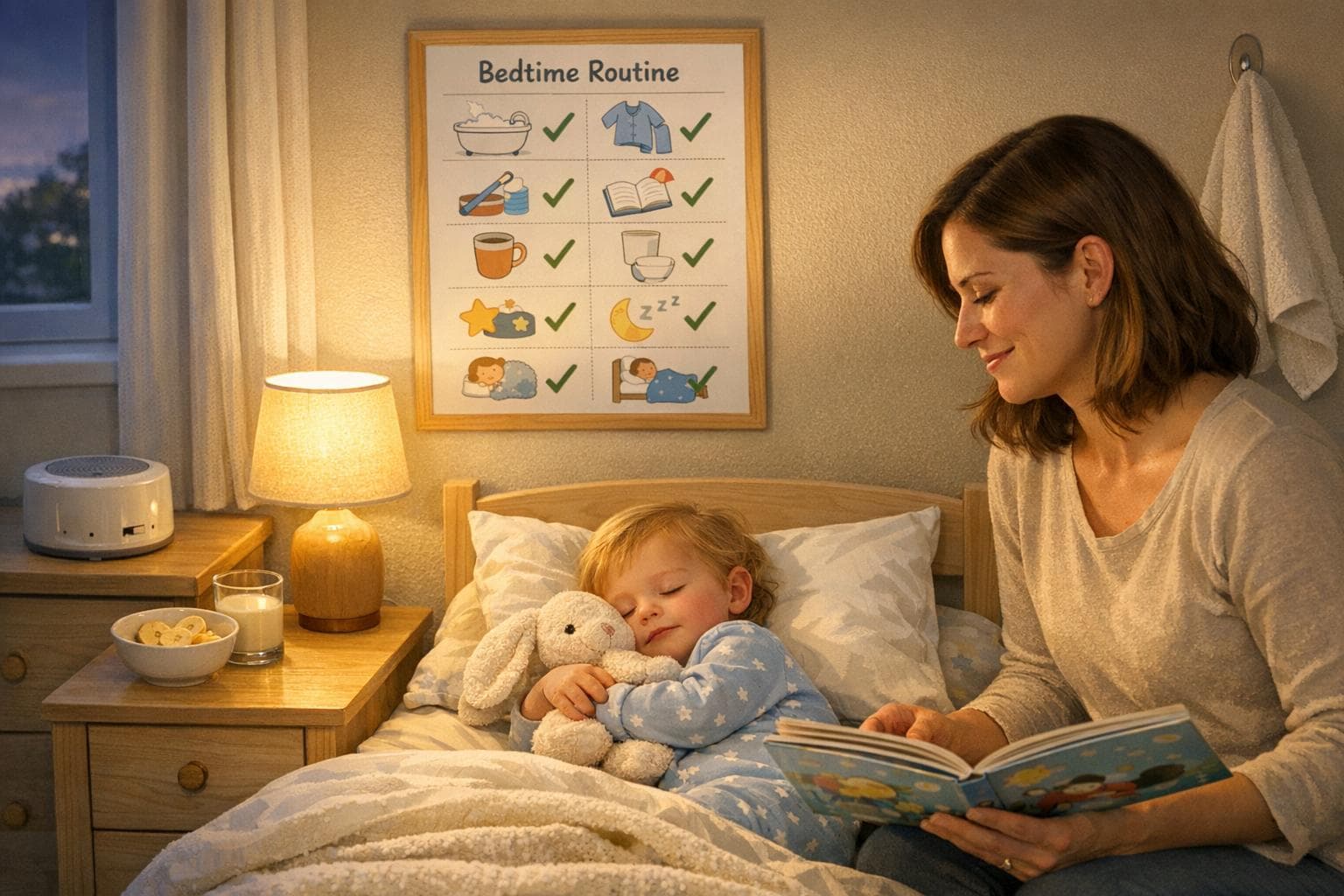
10 Ways to Make Bedtime Easier for Toddlers
Putting your toddler to bed doesn’t have to be a nightly struggle. By creating a predictable and calming bedtime routine, you can help your child fall asleep faster, stay asleep longer, and reduce bedtime battles. Here are 10 practical strategies to make bedtime smoother:
- Set a Regular Schedule: Stick to the same bedtime every night, ideally between 7:00 PM and 8:00 PM, to support your toddler’s natural sleep rhythm.
- Dim the Lights: Lower lights and avoid screens an hour before bedtime to encourage melatonin production.
- Warm Bath or Wipe-Down: A short warm bath can relax muscles and signal it’s time for sleep.
- Hygiene First: Take care of teeth brushing and potty trips early to avoid stalling tactics.
- Comfortable Pajamas: Choose breathable sleepwear and keep the room at a comfortable 65°F–72°F.
- Small Snack and Water: Offer a light, healthy snack and water before bed to prevent hunger or thirst delays.
- Bedtime Stories: Read short, familiar stories to help your toddler wind down.
- White Noise: Use a fan or white noise machine to block out distractions and create a soothing environment.
- Comfort Object: Introduce a lovey or stuffed animal to ease separation anxiety and promote self-soothing.
- Bedtime Chart: Use a visual chart to guide your toddler through the bedtime routine and encourage independence.
These steps, when done consistently, can help your toddler feel secure and ready for sleep. Start with one or two changes tonight and build from there to reclaim calmer evenings.
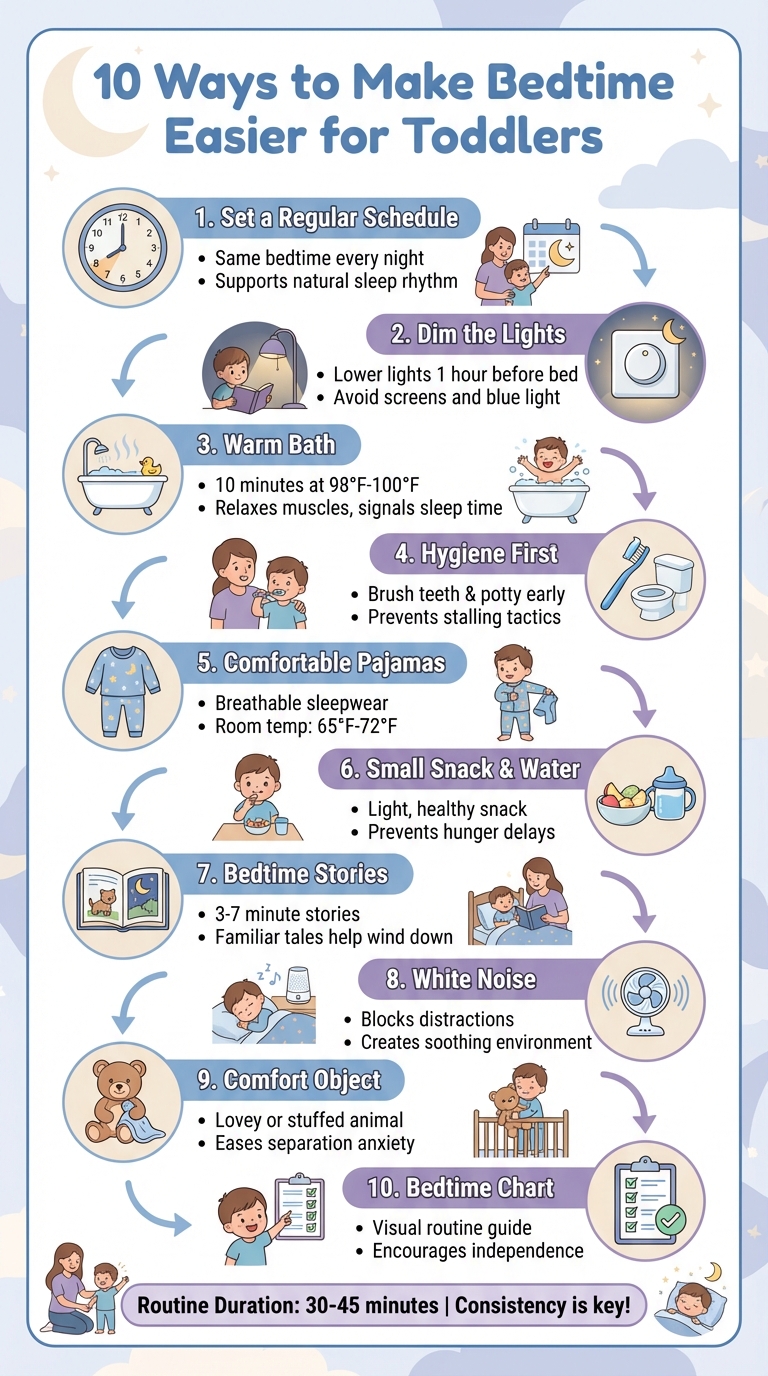
10-Step Bedtime Routine for Toddlers: A Visual Guide
Toddler Bedtime Battles: Why They Happen and How to Make Nights Easier
sbb-itb-d6d0693
1. Set a Regular Bedtime Schedule
A consistent bedtime is key to helping toddlers sleep better. Sticking to the same bedtime every night supports their internal circadian rhythm, making it easier for them to fall asleep and stay asleep. Plus, having a predictable routine can provide a sense of security, reducing bedtime battles.
As highlighted by Sleep Foundation:
"A predictable routine also gives your child a sense of security and teaches them how to fall asleep on their own." – Sleep Foundation
For most toddlers, an ideal bedtime falls between 7:00 PM and 8:00 PM, aligning with their natural sleep patterns. To pinpoint the best time for your child, consider when they wake up and work backward. Toddlers aged 12 to 24 months typically need 11 to 14 hours of sleep daily (including naps), while preschoolers aged 3 to 5 years require 10 to 13 hours.
Tips for a Smooth Routine
Keep bedtime routines short and simple - between 30 and 45 minutes. Anything longer can be hard to stick to consistently. If you need to adjust bedtime, do it gradually in 15-minute increments to help your toddler's body adapt without becoming overtired.
Stick to the schedule even on weekends and vacations. While it may be tempting to relax the rules, maintaining consistency prevents disruptions to your child's sleep cycle and avoids undoing your weekday progress.
2. Lower the Lights and Create a Quiet Space
Dimming the lights helps signal bedtime by encouraging melatonin production, the hormone that promotes sleep. On the other hand, bright lights - especially blue light from screens like TVs, tablets, and smartphones - can disrupt melatonin levels and overstimulate your toddler's brain, making it harder for them to relax.
Effectiveness in Calming Toddlers
Dr. Brian Chen, a sleep specialist at Cleveland Clinic, explains:
"Generally bright blue lights significantly affect our normal melatonin production, which controls our circadian rhythm. So, our sleep schedules can get really messed up by bright lights, blue lights at nighttime".
A dimly lit room helps soothe your toddler, signaling that it's time to settle down. If your child is afraid of complete darkness, try using a red or amber nightlight placed low to the ground. Dr. Chen points out:
"Research shows a red-colored nightlight is best for bedtime because it doesn't disrupt melatonin production".
It's best to avoid blue-tinted lights entirely, as they can undo your efforts to create a calming environment.
Ease of Implementation
Start by dimming the lights and shutting off screens at least an hour before bedtime. Using blackout curtains to block outside light and maintaining a room temperature around 65°F can further create a sleep-friendly space. If your toddler wakes during the night, keeping the room dark and quiet will help them drift back to sleep more easily.
3. Give a Warm Bath or Quick Wipe-Down
A warm bath does more than just clean your toddler - it relaxes their muscles and signals that it's time to wind down for sleep. The warm water helps soothe their body, and as they step out, the slight drop in body temperature acts as a natural cue for sleep. To get the best results, keep the water between 98°F and 100°F and limit bath time to about 10 minutes. This balance relaxes muscles without drying out their skin.
Effectiveness in Calming Toddlers
Tracy Braunstein, a Certified Pediatric Sleep Consultant at SleepTight Solutions, highlights the importance of routine:
"Toddlers thrive on predictability... A familiar sequence of steps like bath, pyjamas, story and cuddles, helps signal to their body and brain that sleep is the next step".
Studies back this up, showing that a consistent bath-based routine can lead to better sleep in as little as two weeks. Toddlers are less likely to call out or leave their bed after being tucked in. However, if bath time turns into a splash-fest and ramps up their energy, consider moving it earlier in the evening and swapping it with a quick wipe-down instead. These small tweaks can make a big difference in creating a peaceful bedtime routine.
Practical Tips for Parents
Consistency is key, even during bath time. Kate Morse, a Certified Sleep Consultant at Hatch Baby, explains:
"For toddlers, it's a chance to reset after a busy day, especially when they're coming home from daycare or playing outside. Bath time doesn't need to be long - just five to seven minutes is plenty".
If you're short on time, a quick wipe-down can still maintain the routine without the need for a full bath. To keep things calm, dim the lights and speak in a soft, soothing tone. Having towels and pajamas ready nearby ensures a smooth transition from bath to bedtime, making the process as seamless as possible.
4. Take Care of Teeth Brushing and Potty Time First
Handle hygiene tasks early to avoid bedtime delays. Toddlers often use phrases like "I need to go potty" or "I need a drink" as stalling tactics. By addressing these needs upfront, you can save time and energy while keeping the bedtime routine on track.
Practical Tips for Parents
The American Academy of Pediatrics suggests the "Brush, Book, Bed" routine - a straightforward three-step plan that ensures teeth brushing is a consistent part of the evening. The sequence is simple: start with brushing teeth and potty time in the bathroom, then move to the bedroom for storytime. Dr. Craig Canapari, Director of the Yale Pediatric Sleep Center, emphasizes:
"The less your child has to move around the house, the quicker things will go".
To streamline the process, avoid unnecessary trips between rooms. Keeping everything in one area reduces distractions and potential meltdowns. Also, ensure that brushing is the final step for dental hygiene - no bottles, cups, or snacks afterward to protect against cavities.
Tailoring the Routine for Toddlers
Toddlers respond well to clear visual cues. You can create a simple chart with pictures of a toothbrush and potty, letting your child add a sticker after completing each task. This not only builds independence but also makes the process more engaging. To minimize power struggles, offer limited choices, like "Do you want the red toothbrush or the blue one?" or "Would you like to go potty before or after putting on pajamas?". The Calm Editorial Team highlights:
"When [toddlers] feel in charge, it can promote independence and build their confidence".
Set boundaries with clear statements like "This is the last time to go potty" to avoid repeated interruptions. While fostering independence, supervise brushing to ensure it's done thoroughly and with the correct amount of toothpaste. By simplifying these steps, you create a smoother transition to the more relaxing parts of the bedtime routine.
5. Put On Comfortable Pajamas and a Sleep Sack
Once hygiene tasks are done, the next step is to change into cozy sleepwear. This small but important ritual sends a clear signal that bedtime is near. Amber LoRe, Director of Pediatric Expertise at Huckleberry, emphasizes, "Changing into pajamas" provides a consistent transition that helps establish a routine during the critical developmental phase between 13 months and three years.
Choosing the Right Sleepwear
Pick breathable fabrics for your toddler's pajamas to help keep their body temperature steady. Aim to keep the bedroom temperature between 68°F and 72°F for optimal comfort. For younger toddlers, sleep sacks are a safer option, as they eliminate risks like loose cords or strings.
Practical Tips for Parents
To make bedtime smoother, offer your toddler simple choices, like asking, "Do you want the red pajamas or the blue ones?" This gives them a sense of independence while avoiding drawn-out debates. Certified Sleep Consultant Kate Morse from Hatch explains:
"Following the same simple steps each night helps create associations with sleep that make it easier for your child to drift off easily over time".
Keep the atmosphere calm by dressing your toddler in dim lighting, which supports natural melatonin production.
Keeping It Simple and Consistent
Stick to the same order for changing into pajamas each night to build predictability. Even when you're traveling or short on time, it's better to do a quick version of the routine than to skip it entirely. Letting your toddler choose their pajamas can also make the process smoother and give them a sense of control. These small, consistent steps help your child associate bedtime with relaxation and sleep.
6. Provide a Small Snack and Water Before Bed
Toddlers often use hunger or thirst as a way to delay bedtime. To minimize these stalling tactics, it’s helpful to address these needs ahead of time. As Cara Dumaplin, RN, BSN, points out:
"Before bedtime, anticipate your toddler's needs – what do they usually ask for when stalling? Another trip to the bathroom, more water or snacks... Address these needs before bedtime."
By meeting these needs in advance, you can avoid unnecessary delays and create a smoother bedtime routine.
Choosing Snacks That Work for Toddlers
A bedtime snack that combines fiber-rich carbohydrates with a bit of protein or fat can help keep your toddler’s blood sugar levels steady throughout the night. Dr. Stephanie Jackson, Pediatric Neurologist at Riley Hospital for Children, emphasizes:
"I tell parents to offer a snack high in protein or fiber. Foods that are primarily simple carbs and sugar... will make blood sugar rise and then fall quickly, leaving a child hungry again within an hour or two."
Some great options include a banana with almond butter, whole-grain crackers with cheese, or plain yogurt topped with a few berries. These choices help satisfy hunger without triggering a sugar crash that could disrupt sleep.
Making It Manageable for Parents
This approach also helps parents distinguish between genuine hunger and bedtime stalling. Recipe developer Amy Palanjian suggests:
"Keep the food simple and straightforward and not their favorite food to help you know if the child is actually hungry."
For instance, if your toddler is happy to eat a plain banana or a piece of toast, they’re probably hungry. If they demand cookies or a favorite treat, it might be more about delaying bedtime than actual hunger.
Keeping It Simple and Effective
Offer the snack 30 to 60 minutes before bed, and make sure it’s served in a designated dining area - not in the bedroom. Use a spill-proof cup for water to avoid messes. Dr. Sally Ibrahim, Director of Pediatric Sleep Medicine at University Hospitals, advises:
"Be sure to tell your child that the last drink or snack of the day is indeed the 'last drink,' etc., of the day."
Set clear expectations that this is their final snack and drink for the night. If the snack is served after brushing teeth, remember to brush again to prevent cavities. Also, steer clear of chocolate, sugary drinks, or anything with caffeine, as these can interfere with falling asleep.
7. Read Bedtime Stories with Kidooki

Once you've set a calm atmosphere using earlier steps, introducing personalized storytelling can strengthen bedtime routines and act as a clear signal for sleep.
How Bedtime Stories Help Toddlers Relax
Bedtime stories are a tried-and-true way to help toddlers wind down. In fact, 71% of parents say storytelling is an effective way to prepare their kids for bed, with 49% listing it as their top choice for easing the nighttime transition. Short, familiar tales - lasting about 3–7 minutes - are ideal for toddlers, as they match their attention spans and help reduce excitement levels.
As Roshni Sawhny, Head of Growth at Storypie, points out:
"Short and familiar beats long and new. Also, tiny stories lower arousal and create predictability."
Starting routines like storytelling as early as three months old has been linked to better sleep outcomes. By age three, children with consistent bedtime habits tend to wake up less at night and sleep longer - sometimes up to an hour more each night.
Tailored to Toddler Needs
Toddlers are at an age where their imaginations are blossoming, but they often struggle to separate reality from make-believe. Personalized stories can provide a comforting sense of familiarity and control while supporting their growing independence.
Kidooki makes bedtime special by offering personalized stories that include your child’s name and interests. These stories are paired with soothing watercolor illustrations and professional audio narration. Each night, the app delivers a new, age-appropriate story designed to make your child feel secure and ready for sleep. Plus, you can save favorite stories in the app’s library and manage profiles for multiple children.
Making Storytime Easy
To get started, dim the lights and use a calm voice during storytime to signal that the day is winding down. Use audio-only mode or dim the screen at least 30–60 minutes before bedtime to reduce blue light exposure. Let your toddler choose between two specific stories, giving them a sense of control without overwhelming them with too many options. Following the same sequence every night creates a smooth and predictable transition to sleep.
8. Turn On White Noise or a Fan
Effectiveness in Calming Toddlers
White noise machines or fans can work wonders by masking everyday household sounds - like conversations or the TV - that might distract your toddler from settling down for sleep.
Using the same sound every night creates a bedtime cue for your toddler's brain. Amanda Rock puts it perfectly:
"If you choose the same soundtrack every night, eventually your child will associate that music with bedtime and will likely learn to relax much faster."
This consistent audio signal helps your child transition into sleep more easily and can even lead to better overall sleep quality. It’s a simple yet effective way to make bedtime smoother.
Practicality for Parents
The good news is, you don’t need to spend a fortune to reap the benefits. Basic white noise machines with features like sound options and night lights are usually priced between $15 and $25. If you’re looking for extras like Wi-Fi connectivity or "time-to-rise" lights, mid-range options such as the Hatch Rest are available for around $70. For those who prefer premium models, the SNOOZ Smart White Noise Machine, which uses an actual fan, costs about $100.
To get the most out of your white noise machine, set it to play continuously rather than using a timer. This ensures the sound persists throughout the night, helping your toddler stay asleep. Position the machine strategically - between your child’s bed and potential noise sources like a hallway or window - to block out disturbances effectively. Keep the volume at a level that masks household noise without being too loud to disrupt sleep.
Ease of Implementation
Switch on the white noise or fan during the final "quiet time" phase of your bedtime routine. This signals the shift from activity to sleep. Machines with a memory function can make things even easier by automatically resuming your preferred sound and volume settings each night. Incorporating this step into your nightly routine helps create a seamless transition to bedtime.
9. Give Your Toddler a Lovey or Stuffed Animal
Adding a comfort object, like a stuffed animal or blanket, can help ease your toddler into an independent sleep routine.
How It Helps Toddlers Relax
A lovey can be a powerful tool to soothe your toddler’s separation anxiety. These objects act as a comforting link between your presence and their ability to sleep on their own. According to the Sleep Foundation:
"In early childhood, many toddlers are affected by separation anxiety. This is a good time to introduce a stuffed animal or comfort blanket when you leave the room."
Cuddling something soft can even boost oxytocin levels, which naturally helps your child feel calmer. When paired with a consistent bedtime routine, a lovey can make a noticeable difference in just a few nights.
Picking the Right Lovey
Make sure your child is at least 12 months old before introducing a lovey, as soft objects can be a suffocation hazard for younger infants. Dr. Vincent Iannelli, a pediatrician, explains:
"A security object, like a stuffed animal or blanket, can be an important part of a good bedtime routine, but only for children one-year-old and older."
Choose a lovey that’s soft, breathable, and free of small parts like buttons or beads, which could be choking hazards. It should be small enough for your toddler to handle but big enough to provide comfort. Avoid toys with batteries, lights, or sound features, as these can overstimulate your child.
Benefits for Parents
A lovey can help your toddler learn to self-soothe at night. Instead of calling for you when they wake up, they can reach for their comfort object, which often leads to better sleep for the whole family.
To avoid any bedtime drama, consider buying two or three identical loveys. This way, you can rotate them for washing or have a backup ready if one gets lost. As children’s sleep consultant Rebecca Michi advises:
"If you find something your child loves and considers their lovey, I advise purchasing an extra one."
To make the lovey even more comforting, you can spend some time with it first - like tucking it into your shirt - so it carries your scent. This small step can make a big difference when you introduce it at bedtime.
Making It Part of the Routine
Let your toddler pick between two safe loveys and place the chosen one within easy reach in their crib. Hand it to them during the quiet wind-down period as you tuck them in. This simple addition reinforces the sense of security and consistency in their bedtime routine. By keeping it predictable, you can help your toddler feel more at ease as they drift off to sleep.
10. Use a Bedtime Chart to Track Tasks
A bedtime chart can be a game-changer for helping toddlers navigate their evening routine while fostering independence. This simple tool provides a clear, visual guide for bedtime tasks, reducing the need for constant reminders and making the process smoother for both parents and toddlers.
Why It Works for Toddlers
Toddlers thrive on visuals since many are not yet able to read. A chart with pictures or photos - showing tasks like brushing teeth, putting on pajamas, or reading a bedtime story - helps them grasp the sequence of activities without repeated instructions. This approach taps into their natural learning style and supports their growing desire for independence. Psychotherapist Heather Turgeon highlights the benefits:
"Bedtime resistance is basically a power struggle and the chart makes your child feel more in control and powerful."
When toddlers can see what’s coming next, they feel more secure and less resistant to the transition from play to sleep.
How to Create and Use a Chart
You don’t need elaborate supplies to make a bedtime chart. A simple cookie sheet with magnets works wonderfully - your toddler can move tasks from a "To Do" side to a "Done" side. Other options include:
- A dry-erase board
- Fold-up paper tabs
- A felt board with Velcro icons
Place the chart at your toddler’s eye level, whether in their bedroom or hallway, so they can interact with it easily. To keep things manageable, limit the chart to 4–6 key tasks that can be completed in 15–30 minutes. This keeps the routine consistent without overwhelming your child. You can even make it fun by pretending to "forget" the next step and asking your toddler to check the chart.
Making It Work for Parents
The bedtime chart isn’t just for toddlers - it’s a helpful tool for parents, too. It minimizes the need to repeat instructions, acting as a neutral guide when your child tries to skip a step. Certified Pediatric Sleep Consultant Cara Dumaplin explains:
"The simple act of following the chart gives your child a sense of control over their routine, while maintaining your loving boundaries and expectations."
This balance of control and boundaries helps reinforce a calm bedtime environment, leading to better sleep and improved emotional regulation. Families often notice positive changes within just a few nights. To keep the process natural, avoid turning the chart into a reward system with stickers or prizes. Instead, treat it as a visual guide to help your child transition smoothly to sleep.
Conclusion
Bedtime doesn’t have to feel like a nightly struggle. The ten strategies shared here - from sticking to a regular schedule to using visual charts - provide tools to create a calmer and more predictable bedtime routine for your toddler. If resistance feels overwhelming, remember that you’re not alone in this journey.
Focus on creating a familiar routine rather than striving for perfection. As Amber LoRe, Director of Pediatric Expertise, explains:
"Consistency counts: Toddlers feel secure when bedtime follows the same predictable pattern each night".
While improvements can sometimes show within just a few nights, building new habits takes patience and time.
Every child is unique, so tailor the routine to fit what works best for your toddler. For example, if a warm bath seems to energize rather than relax them, consider scheduling it earlier in the day. If their planned bedtime doesn’t align with when they’re naturally sleepy, adjust it by 15 minutes to find their ideal “sweet spot.” Giving your toddler small choices - like picking pajamas or deciding on a bedtime story - can help them feel more in control while keeping the routine consistent. These small tweaks can make a big difference in creating a routine that feels adaptable yet steady.
If one approach doesn’t work right away, don’t lose heart. Trial and error is part of the process, and some nights will go smoother than others. The important thing is to maintain consistent, loving boundaries. Over time, your toddler will come to understand what to expect, feel more secure, and settle into a healthier sleep rhythm. Start with one or two changes tonight, build from there, and trust that these small, steady steps will lead to better sleep for everyone in your home.
FAQs
How long will it take to see bedtime improvements?
Establishing a calming bedtime routine typically takes around 20 to 30 minutes. Sticking to this routine every night can encourage your toddler to build healthier sleep habits. With consistent practice, you might start to see changes within just a few weeks.
What if my toddler keeps getting out of bed?
If your toddler keeps climbing out of bed, it might be time to focus on creating a predictable bedtime routine. Include soothing activities like reading a favorite story or having a quiet conversation. Make sure to tuck them into bed when they’re sleepy but still awake, and stick to the same routine every night.
If the issue persists, try to create a calm and relaxing environment before bed by limiting noise and bright lights. Keep stimulation to a minimum and gently remind them of bedtime rules with consistent reassurance. Building better sleep habits takes time, so patience and persistence are essential.
How do I handle bedtime when we travel?
Traveling with toddlers often turns bedtime into a bit of a challenge, but keeping things consistent can work wonders. Stick to routines your little one knows - like reading their favorite book or using a comforting nightlight - to create a sense of familiarity. While you might need to adapt to a new setting, keeping consistent bedtime signals helps ease the transition. Pack familiar sleep aids, keep the atmosphere calm, and, once you're back home, slip right back into your usual routine to help your toddler settle in again.