
Bedtime Routine Checklist for Young Children
Bedtime routines can help kids sleep better and feel calmer. A consistent plan helps children fall asleep faster, stay asleep longer, and wake up less often. This guide breaks down a simple, step-by-step bedtime process to make evenings smoother for families. Key tips include:
- Set a bedtime based on wake-up time: Kids aged 3–5 need 10–13 hours of sleep, while 6-year-olds need 9–12 hours. Example: For a 7:00 AM wake-up, bedtime should be around 7:00 PM.
- Follow a routine: Activities like brushing teeth, reading a story, and cuddling signal it's time to wind down.
- Limit screen time: Turn off devices 30–60 minutes before bed to avoid disrupting sleep hormones.
- Create a calming environment: Use soft lighting, comfy pajamas, and white noise if needed.
Consistency is key. Even small changes, like a printable chart or personalized bedtime stories, can make a big difference in easing bedtime struggles.
The Best Bedtime Routine Tips for Kids (Featuring Book Suggestions) 😴
sbb-itb-d6d0693
Sleep Schedule Guidelines for Young Children
Sleep isn't just about avoiding crankiness - it plays a huge role in supporting brain development, emotional regulation, and physical growth. Here's what research says about how much sleep young children need and how to make it happen.
Children aged 3 to 5 years should get 10 to 13 hours of sleep in a 24-hour period, which can include a daytime nap. By age 6, this shifts slightly to 9 to 12 hours. As for bedtime, experts suggest aiming for between 7:00 PM and 8:00 PM for kids in this age group.
The key is to base bedtime on your child's wake-up time. Dr. Vaishal Shah, a Pediatric Sleep Specialist at Cleveland Clinic, explains:
"Start with when your child needs to wake up in the morning, then count backward to come to an appropriate bedtime".
For example, if your child needs to wake up at 7:00 AM and requires 12 hours of sleep, bedtime should be set for 7:00 PM.
| Age Group | Total Sleep Needed (24 Hours) | Typical Bedtime Range |
|---|---|---|
| 3-5 Years | 10-13 hours (including naps) | 7:00 PM - 8:00 PM |
| 6 Years | 9-12 hours | 7:30 PM - 8:30 PM |
This table provides a quick overview of sleep needs, but naps can significantly influence bedtime.
Naps make a difference. Most children stop napping between ages 3 and 5. If your child skips their nap, adjust bedtime earlier by 30 to 60 minutes to prevent overtiredness. For those who still nap, ensure naps end by 3:00 PM to avoid interfering with an 8:00 PM bedtime. On weekends, try to keep morning wake-up times within an hour of weekday routines to maintain their internal clock.
These guidelines are a great starting point for creating a consistent bedtime routine. Use them to shape a calming evening schedule that works for your child.
Bedtime Routine Checklist
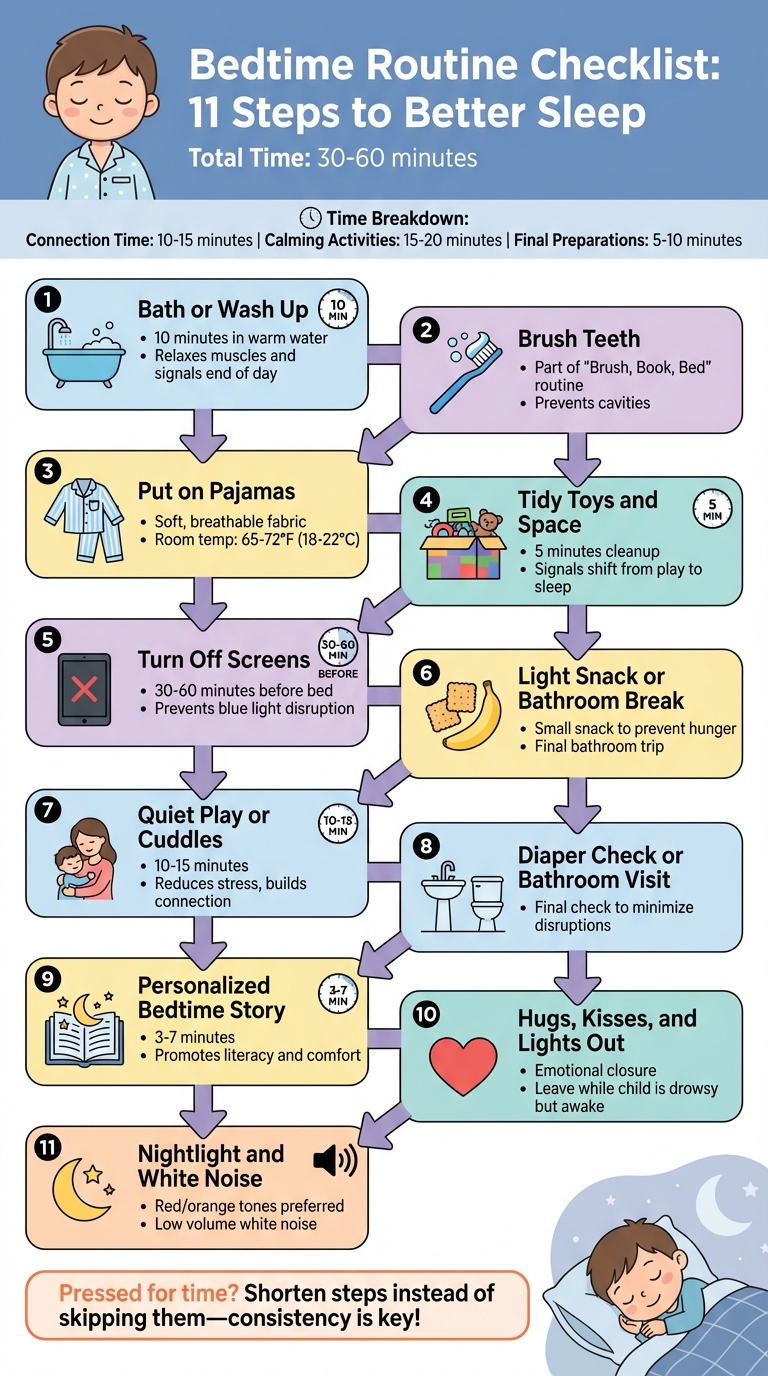
11-Step Bedtime Routine Checklist for Young Children
Creating a predictable bedtime routine doesn’t have to be overwhelming. The American Academy of Pediatrics suggests a straightforward approach: "Brush, Book, Bed", combining hygiene, reading, and sleep preparation. That said, many families find that adding a few extra steps makes the process smoother. Ideally, a bedtime routine should last between 30 and 60 minutes. Here's a simple structure to follow: start with connection time (10–15 minutes), transition to calming activities (15–20 minutes), and wrap up with final sleep preparations (5–10 minutes).
Pressed for time? Instead of skipping steps, shorten them. For example, read a quick 2-minute story instead of a longer one to maintain the rhythm of the routine without dragging it out. This checklist can help guide your nightly routine and make the transition to sleep easier.
Step 1: Bath or Wash Up
A warm bath can relax muscles and signal the end of the day. Aim for about 10 minutes in comfortably warm water. If baths feel too energizing for your child, consider moving them earlier in the day or replacing them with a quick warm wash-up.
Step 2: Brush Teeth
Tooth brushing is a key part of the "Brush, Book, Bed" routine. Brush your child’s teeth last in the hygiene sequence to help prevent cavities. For toddlers who resist, try offering a choice of two toothbrushes or singing a short song to make it more fun. If brushing tends to upset your child, you can move it earlier in the routine to give them time to settle afterward.
Step 3: Put on Pajamas
Choose soft, breathable pajamas that match the season. Keep the bedroom temperature between 65–72°F (18–22°C) for optimal sleep. Let toddlers pick between two pajama options to give them a sense of control, while older kids can select their own to encourage independence.
Step 4: Tidy Toys and Space
Dedicate five minutes to tidying up toys and play areas to signal the shift from playtime to bedtime. Younger children might enjoy turning cleanup into a game, like racing to put away toys before you count to 20. Older kids can decide how they want to organize their space.
Step 5: Turn Off Screens
Switch off all electronics 30–60 minutes before bedtime to avoid blue light disrupting melatonin production. Replace screen time with quiet activities like coloring or puzzles.
Step 6: Light Snack or Bathroom Break
Offer a small snack - like a banana, a few crackers, or a small cup of milk - to prevent hunger during the night. Pair this with a final bathroom trip to reduce the chance of waking up overnight.
Step 7: Quiet Play or Cuddles
Spend 10–15 minutes on calming activities, such as cuddling or working on a puzzle. This helps reduce stress and builds a sense of connection before sleep.
Step 8: Diaper Check or Bathroom Visit
Wrap up with a final diaper change or bathroom trip for potty-trained kids to minimize nighttime disruptions.
Step 9: Personalized Bedtime Story with Kidooki

Reading together promotes early literacy and serves as a comforting bedtime cue. Kidooki’s personalized bedtime stories feature your child’s name and interests, making storytime even more engaging. These stories include soothing watercolor illustrations and professional audio narration. With options to create multiple profiles and save favorite stories, Kidooki adds a personal touch to your bedtime routine.
Step 10: Hugs, Kisses, and Lights Out
End the routine with affection - hugs, kisses, and a warm "Goodnight" or "I love you." This emotional closure helps your child feel secure. Leave the room while they’re drowsy but awake, encouraging them to settle on their own.
Step 11: Nightlight and White Noise
Use a soft nightlight with red or orange tones to avoid disrupting melatonin production. A white noise machine can mask background sounds, creating a consistent sleep environment. Keep the volume low - just enough to block out sudden noises without being distracting.
How to Use Kidooki for Bedtime Stories
Step 9 of your bedtime routine just got a little more magical with Kidooki. Here's how to set it up for personalized bedtime storytelling. Start by creating a profile for your child - enter their name, age, and interests, like favorite animals or themes. This step ensures each story feels tailored to your little one. If you have more than one child, you can set up separate profiles to customize the experience for each of them. It’s a simple way to enhance your existing bedtime routine.
Once the profile is ready, Kidooki delivers a new story every night. These stories, which run between 3 and 7 minutes, are just the right length to help your child wind down before sleep. According to research, 71% of parents report that storytelling helps their children relax at bedtime, and nearly half (49%) say it’s their go-to method for settling kids.
Kidooki’s soothing narration and calming visuals add an extra layer of relaxation. For the best experience, play the story in a softly lit room to avoid disrupting your child’s natural sleep cues with blue light.
As you explore Kidooki, you can save favorite stories to your personal library, making it easy to revisit the ones your child loves most. This combination of personalized content, gentle storytelling, and tranquil imagery helps create a consistent bedtime ritual. Over time, it strengthens the parent-child bond while signaling to your child that it's time to rest. Ready to try it out? Start your free trial today - no credit card required!
Making a Printable Bedtime Routine Chart
A visual chart transforms a bedtime checklist into an easy-to-follow routine. For toddlers and preschoolers who aren’t reading yet, use simple, clear icons to represent each step. Stick to one clear object per picture - like a toothbrush or pajamas - and use bold outlines with high-contrast colors to ensure clarity.
Let your child take part in creating the chart by choosing colors, stickers, or even photos. This involvement not only makes the chart more personal but also helps them feel more invested in using it. To make it even more engaging, you could take photos of your child completing each task. These real-life images often resonate more than generic clipart, encouraging them to stick to the routine while fostering a sense of independence.
For durability, laminate the chart once it’s printed. You can use a home laminator with laminating sheets or opt for professional lamination. If lamination isn’t an option, clear contact paper works as a great alternative. This added layer of protection is especially important if the chart will be in areas prone to splashes, like the bathroom.
To make the chart interactive, consider adding Velcro dots or dry-erase checkboxes. A simple "To-Do" and "Done" system allows your child to physically move task cards or check off activities as they complete them. Alternatively, place the chart in a glass or plastic document frame, which can double as a dry-erase surface for marking tasks.
Hang the chart at your child’s eye level in a location where the routine takes place, such as on the bathroom mirror or bedroom door. If your child resists a step, redirect their attention by asking, "What does the chart say is next?". This shifts the focus away from parental instructions and toward the routine itself. As hiccapop explains:
"Instead of you being the 'boss' of bedtime, the chart is. Your toddler gets to see what's next... This simple act of participation gives them a feeling of independence and ownership".
This visual tool not only simplifies the bedtime process but also helps your child feel more in control, easing the transition into their nightly routine.
Conclusion
A consistent bedtime routine can do wonders for your child’s sleep and overall well-being. Research shows it can help them fall asleep faster, adding up to 60 extra minutes of rest each night. Beyond sleep, it supports key areas like working memory, attention, cognitive flexibility, and emotional regulation - all crucial for their development. The magic lies in consistency, not duration - a quick 15-minute routine practiced nightly is far more effective than a longer one done irregularly. And the best part? You could see improvements in sleep quality within just three nights of sticking to a routine.
Adding a personal touch to this routine makes it even more impactful. For example, Kidooki's personalized bedtime stories can turn those final moments of the day into something your child looks forward to. These stories not only reinforce the calming elements of the routine but also transform bedtime from a potential struggle into a cherished bonding experience. Plus, storytelling releases oxytocin, a hormone that naturally preps the body for sleep, helping your child drift off more easily.
The habits you’re building now go far beyond tonight. A predictable bedtime routine sets the stage for academic success, better social skills, and improved health. By creating this nurturing and structured environment, you’re giving your child tools that will benefit them for years to come.
FAQs
What if my child fights the routine every night?
Getting kids to stick to a bedtime routine can feel like a challenge, but a little consistency and calm effort can go a long way. The key is to keep the routine simple and centered around relaxing activities, like reading a favorite story or playing soft, soothing music. Try to avoid turning it into a battle of wills - offering gentle reassurance can help your child feel safe and secure. Over time, with patience and repetition, they’ll start to connect the routine with a sense of calm and predictability, making bedtime less of a struggle.
How do I adjust bedtime when naps change?
When your child's nap schedule shifts, it's important to tweak their bedtime gradually to support a healthy sleep routine. Adjust bedtime by 15 to 30 minutes each night over a few days, allowing them to adapt more smoothly. If naps become longer, consider moving bedtime earlier. On the other hand, if naps are shorter or less frequent, a slightly later bedtime might be more suitable. These small, steady adjustments can help reset their internal clock and encourage better sleep habits overall.
How long until a new bedtime routine starts working?
Establishing a consistent bedtime routine usually takes around 20 to 45 minutes each night. While you might not see immediate results, experts note that sticking to the routine for several days - or even weeks - can lead to noticeable improvements in sleep quality. Setting aside 15 to 20 minutes for calming activities before bed can make it easier for children to wind down and transition to sleep. The secret? Patience and consistency.