How Bedtime Stories Improve Sleep Habits
A short bedtime story can help kids ages 3 to 6 fall asleep faster, resist bedtime less, and wake less during the night. When I keep the routine the same each night, story time becomes a clear sleep cue. Research in the article shows that a steady routine with a story can help children fall asleep 12 to 18 minutes faster and get about 10 more minutes of sleep per night.
Here’s the main idea in simple terms:
- Kids sleep better with a steady routine
- Stories work best when they happen at the same point each night
- Screens before bed can make sleep harder
- A calm voice, dim light, and short story help kids wind down
- Personalized stories can hold a child’s attention and cut bedtime pushback
- Most routines need about 2 to 3 weeks of steady use before patterns start to shift
A few numbers stand out:
- 1 hour of bright screen use before bed can suppress melatonin in preschoolers by up to 88%
- A study of 4,274 children linked bedtime routines with fewer night wakings
- A simple bedtime routine often takes just 20 to 40 minutes
- A sleep-friendly bedroom is often kept around 65–70°F
If I wanted the shortest version possible, it would be this: brush teeth, read one calm story in low light, use the same closing words, then lights out. That simple pattern is the point.
The article below explains why that works, how personalized stories fit in, and what I can start doing tonight.
Why many children struggle at bedtime
A big reason many children struggle at bedtime is simple: they don't get a steady signal that bedtime has started.
Bedtime pushback often begins when the evening routine feels unpredictable. If the steps at the end of the day keep changing, children don't get a clear cue that sleep is next. And when bedtime feels uncertain, kids are more likely to fight it instead of seeing it as the start of sleep.
How inconsistent routines lead to bedtime resistance
The brain responds to dimmer light and a predictable sequence by starting melatonin production. When evening events shift from one night to the next, that signal gets thrown off. Children whose bedtime changes by more than 30 minutes from night to night have much worse sleep outcomes than children on a steady schedule.
When children know what's coming, settling down gets easier. When they don't, stalling, protests, and bedtime resistance tend to show up.
Why screen time before bed makes sleep harder
Screens can make bedtime a lot harder. Just one hour of bright screen exposure before bed can suppress melatonin in preschoolers by up to 88%, and that effect can last at least 50 minutes after the screens are turned off. On top of that, fast-paced digital content keeps children mentally switched on. It also crowds out calmer habits, like story time, that help signal the brain it's time to wind down.
A book or audio story before lights-out works much better. That kind of calm, repeatable routine gives children a clearer cue to settle and drift toward sleep.
sbb-itb-d6d0693
How bedtime stories improve sleep habits
In a dim room, with a parent's calm voice, a story can tell a child, it's time to sleep. That steady pattern helps the body begin to wind down. Over time, story time stops feeling like just one more part of the evening and starts working like a sleep signal.
Stories give children calm sleep cues they can recognize
When the same pattern happens each night - dim light, a calm voice, and the same story routine - the brain starts linking those moments with sleep coming next. In plain terms, the routine becomes a clear cue: bedtime is here.
That pattern can make a measurable difference. A study of 4,274 children found that a consistent bedtime routine that included a story added an average of 10 minutes of sleep per night and reduced night wakings.
A simple way to make story time work better: lower your voice and slow your pace. That change in tone can help regulate a child's nervous system.
Once the body starts settling, the story can do something else too: it can help with the feelings that often show up at night.
Stories help children settle at night
Bedtime is often when the day's worries come bubbling up. Stories can give children a way to work through those feelings without having to explain everything out loud. When a character faces a problem and moves through it, children often settle by following that emotional path too.
That gentle process can ease anxiety and reduce the bedtime worry that makes it hard to fall asleep. A parent's calm presence and voice are also linked to lower evening cortisol levels, the stress hormone that can keep children alert and restless.
That same calm helps shared reading feel soothing, not overstimulating.
Shared story time strengthens the parent-child bond
Story time does more than quiet the mind. It also builds closeness. Shared reading helps children feel safe and connected. And when a child feels safe, relaxing after the story ends comes more easily.
With time, the story itself can become a small bridge between the rush of the day and sleep.
Why personalized bedtime stories can work better
Personalized bedtime stories can strengthen sleep cues because kids pay more attention when the story feels like it’s about them. That repeated personal link can make a story feel familiar fast, which helps bedtime feel more predictable.
How personalization keeps children engaged
There’s a well-documented phenomenon called the self-reference effect: children pay closer attention to - and remember more of - content that connects directly to themselves. The moment a child hears their own name in a story, the child tunes in more closely.
Name-only personalization can help. But stories shaped around a child’s interests and familiar details tend to work better night after night. That steady attention helps reinforce a bedtime cue instead of turning personalization into a one-off gimmick.
That familiarity is what turns personalization into a sleep cue, not just a novelty.
How Kidooki fits into a calming bedtime routine
Kidooki creates a new nightly story with each child’s name, interests, age-appropriate content, and professional narration, ending on a restful note. Parents can save favorites and manage multiple child profiles.
That repeatable setup can help turn story time into a sleep cue children recognize. From there, the next step is keeping the story routine short and consistent.
A simple bedtime story routine parents can start tonight
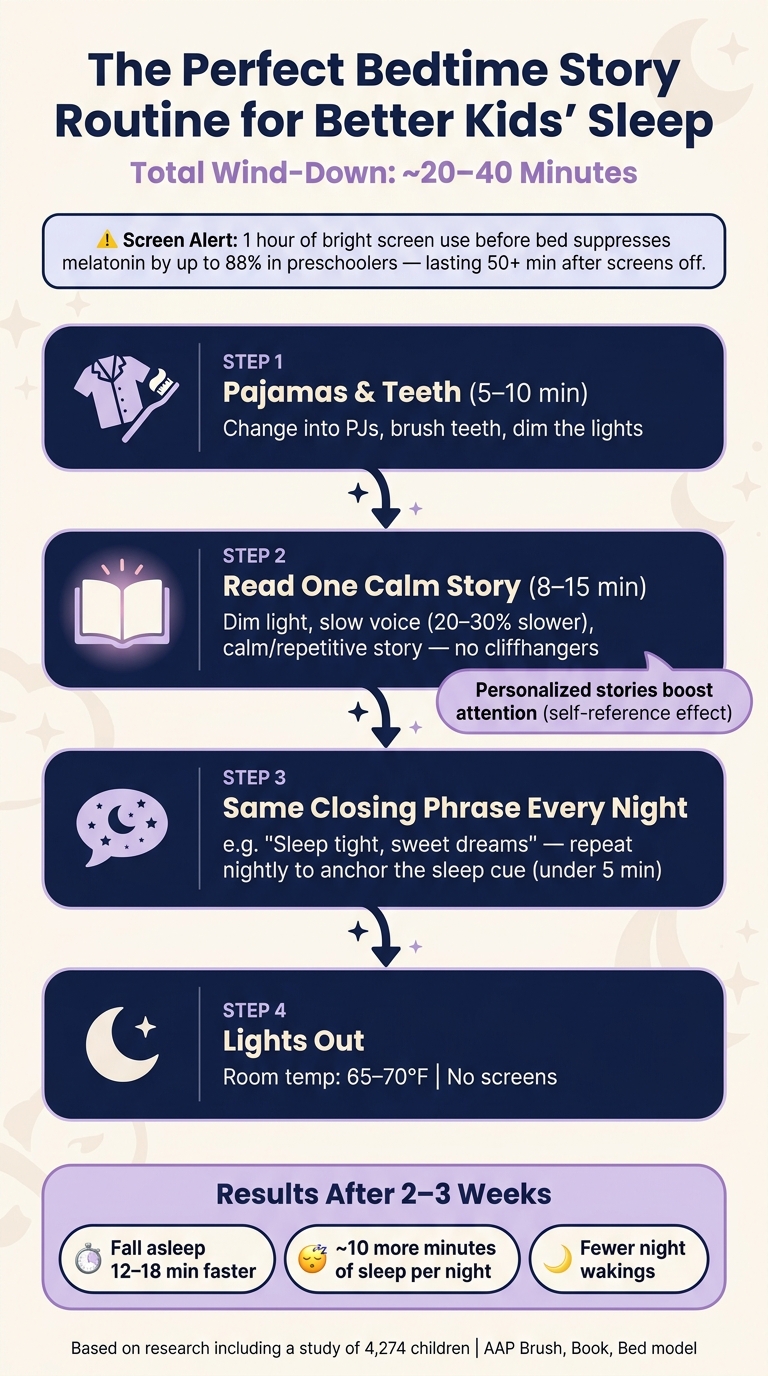
The Perfect Bedtime Story Routine for Better Kids' Sleep
Once the story feels personal, the rest of bedtime should stay the same from night to night. A good model is the AAP’s Brush, Book, Bed routine: spend about 5–10 minutes on pajamas and toothbrushing, 8–15 minutes on a story, and turn the lights out within 5 minutes after the story ends. The whole wind-down should take about 20–40 minutes. Simple works best here because kids learn the pattern fast.
What a sleep-friendly story routine looks like
After bath or wash-up, pajamas, and brushing teeth, make story time the last thing that happens before lights out. Keep the lights dim, use a bedside lamp or nightlight, and keep the room at 65–70°F.
When you read, slow down by about 20–30% and use a lower, softer voice. Pick calm, repetitive stories with comforting endings. Skip fast-paced adventures, scary moments, or cliffhangers that leave kids wide awake. End each session with the same short phrase, like "Sleep tight, sweet dreams," so your child starts to link those words with the end of the day.
Kidooki can slide into this routine without changing the bedtime pattern. The structure stays the same, while the story details change each night.
Keep it simple: one calm story, low light, the same closing phrase, then lights out.
How to tell if the routine is working
The aim is one calm bedtime sequence your child can move through almost on autopilot. Stick with it for 2–3 weeks, then watch for signs like falling asleep faster, less pushback at bedtime, fewer night wakings, and smoother mornings. Research shows that a steady story-based routine can help children fall asleep 12–18 minutes faster on average and add about 10 minutes of total sleep each night.
If bedtime is still a struggle, take a look at whether the story fits your child’s age. It can also help to repeat a favorite story for a few nights, since familiarity strengthens the sleep cue.
Conclusion: How bedtime stories build a routine children can count on
Bedtime stories help because calm, repeated cues build positive sleep associations. When the routine follows the same pattern - the same order, the same dim light, the same closing words - a child starts to know what comes next. Story time becomes a clear signal that sleep is on the way.
Stories give bedtime a calm cue that children can recognize night after night. Research supports this: children with a consistent bedtime routine that includes a story fall asleep 12 to 18 minutes faster on average and get about 10 more minutes of sleep per night. Bit by bit, the story becomes part of what sleep feels like.
This is where personalized stories can help even more. They can make children more willing to take part in bedtime and reduce bedtime resistance. Kidooki supports that rhythm with personalized stories, calming narration, and age-appropriate content, so parents can keep the routine steady without piling on more work.
Bedtime reading also creates a quiet moment of safety and connection. In the middle of a busy day, that small pause can mean a lot.
Most of all, consistency matters more than perfection. A short, calm story told each night - even when everyone is tired - can do more for a child’s sleep than one flawless bedtime session once a week. When bedtime stays predictable, children start to link stories with calm, closeness, and sleep. A short story, told the same way each night, is enough to begin.
FAQs
What if my child wants the same story every night?
That’s completely normal. In fact, it can help.
Wanting the same story every night isn’t stubborn behavior. It’s often part of a steady bedtime routine that helps kids settle in.
A familiar story can feel comforting. It also sends a clear signal that it’s time to slow down, relax, and get ready for sleep. With Kidooki, you can save favorite stories so that nightly repeat is easy.
Can bedtime stories still help if my child is already a poor sleeper?
Yes. Bedtime stories can still help children who struggle with sleep, especially when they’re part of a steady, low-stimulation evening routine.
For reluctant sleepers, personalized stories from Kidooki can make bedtime feel more inviting and rewarding. That emotional bond can ease anxiety and build positive sleep cues, which helps the brain get ready for rest.
Should I read the story myself or use audio narration?
It depends on what you need that night. Both can work well as part of a bedtime routine.
Reading aloud is often the better fit for bonding, physical closeness, emotional reassurance, and the calming effect of hearing your voice in the room. There’s something simple and grounding about sitting together with a book at the end of the day.
Audio narration, including personalized stories from Kidooki, can help when you can’t be there, when you’re juggling multiple children, or when you want a screen-free option that still feels soothing.