Personalized Stories for Kids Who Resist Sleep
If bedtime turns into stalling, extra hugs, and repeat trips out of the room, a calm personalized story can help make nights easier.
From what I see in the article, the main idea is simple: kids ages 3–6 often fight sleep because they want control, feel scared, or are already too tired. A short, steady bedtime routine plus a story that uses the child’s name can hold attention without getting them worked up. That matters because kids were reported to stay engaged 2.5x longer with personalized stories, and about 85% ask for them.
Here’s the short version:
- I’d keep bedtime routines 20–40 minutes
- I’d place story time in the same spot each night
- I’d use stories that last about 8–15 minutes
- I’d keep screens off before bed, since bright screen use can suppress melatonin by up to 88%
- I’d end lights out within 5 minutes after the story
- I’d choose calm stories with safe endings, not fast plots or cliffhangers
- I’d set limits, like offering only two story choices
At its core, this article says personalized stories work best when they are part of a steady routine, match a child’s fears or needs, and help bedtime feel like something the child joins instead of fights.
Why Young Children Push Back at Bedtime
Developmental reasons kids resist bedtime
When a 4-year-old pushes back at bedtime, it usually has more to do with growing independence than defiance.
That can look like bargaining, stalling, or asking for “one more” of everything. In many cases, kids are trying to get a little control and a little reassurance at the same time.
As their imagination grows, normal things like shadows on the wall or sounds in the hallway can feel very real and scary. It helps to validate those fears instead of brushing them aside. When children feel heard, they often settle faster.
There’s another piece here too: overtiredness. If a child stays up past their sleep window, cortisol can make them seem hyper, goofy, or wired instead of sleepy. So if your child seems to get a second wind at night, try moving bedtime 20 to 30 minutes earlier.
Put those pieces together, and the bedtime struggle starts to make more sense. A child may want control, feel scared, and be too tired all at once. That’s a big reason calm, predictable bedtime stories tend to work so well.
How routines and stimulation can make sleep harder
Screens can make bedtime tougher than it looks. Blue light from tablets and TVs can delay sleep. In preschoolers, one hour of bright screen exposure before bed can suppress melatonin by as much as 88%, and that effect can last at least 50 more minutes.
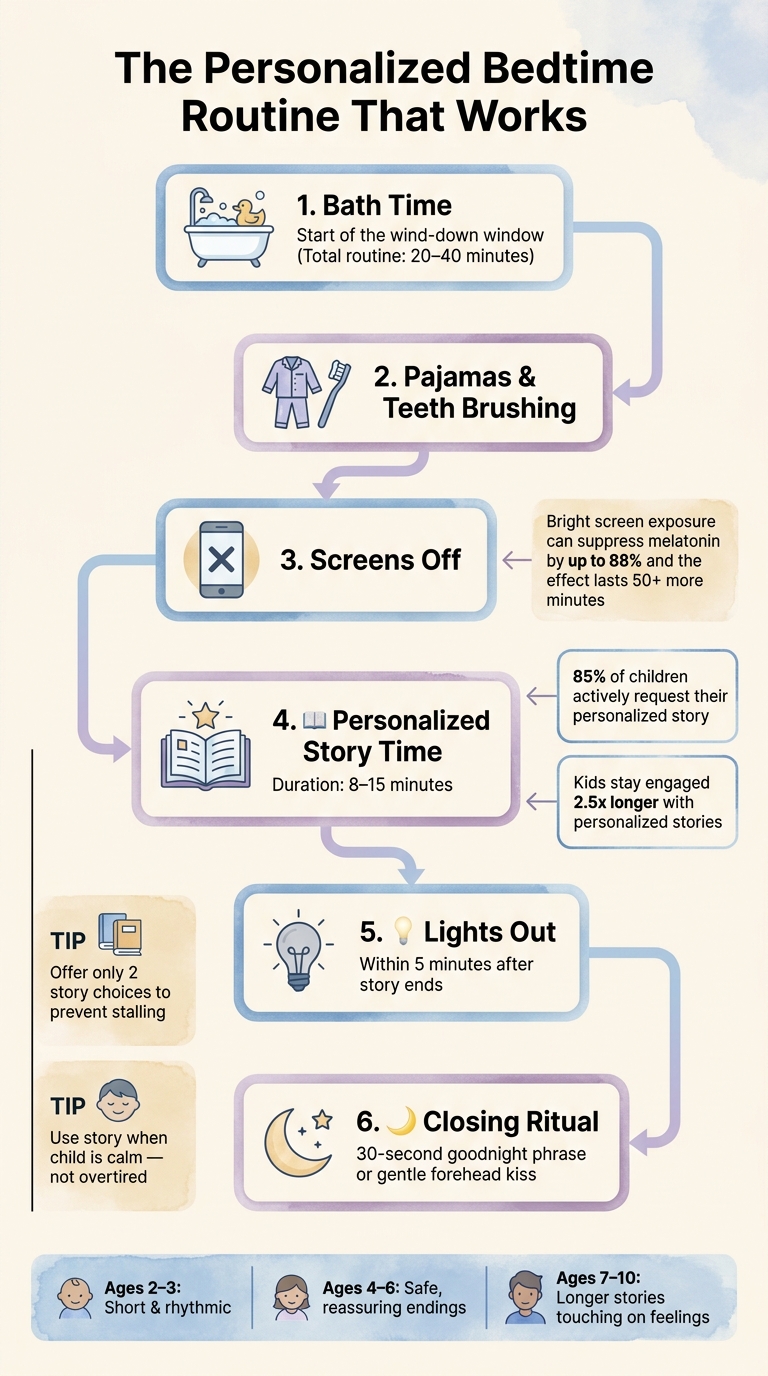
The body’s alert system also needs time to slow down. That’s where a steady routine helps. A simple pattern like bath → pajamas → teeth → story → lights out gives the body a clear signal that the day is ending. What matters most is doing it the same way each night.
When bedtime shifts from one night to the next, children lose the predictability their nervous systems need to relax. A steady 20- to 30-minute wind-down, with screens off and lights dimmed, helps the body settle. That steady rhythm is what makes a calm story so helpful next.
sbb-itb-d6d0693
How Personalized Stories Help Kids Wind Down
Why hearing their own name improves attention and cooperation
Once the room gets quiet and the bedtime routine has started, the story can do a lot of the heavy lifting.
A child’s brain tends to notice their own name, even when it’s mixed into other background sounds. So when they hear it in a bedtime story, their attention locks in fast. And that matters. Instead of feeling like a parent is telling them what to do, the story feels like it’s welcoming them in.
Small familiar details help too. Maybe the story includes their favorite stuffed animal or a place they know well. That kind of touch makes the experience feel warm and personal, not forced. Studies show that 85% of children actively request their personalized stories. That changes the whole mood at bedtime. It becomes something the child wants, not something the parent has to push.
How calm interaction supports sleep without overstimulation
The trick is simple: keep the story interesting, but keep the energy low.
Slow, repetitive language can help children settle while still paying attention. You don’t need much interaction, either. A quiet prompt, like asking them to whisper an answer or pick between two simple options, can keep them present without pulling them out of that sleepy state.
Personalization works best when it holds attention without revving kids up. That’s why the ending matters so much. If the story wraps up with the child-hero safe, warm, and drifting off to sleep, it can support sleep readiness - children often follow the calm they hear in the story. That also makes these stories easy to use at the same point each night, which helps the routine click into place.
Stimulating stories vs. bedtime-friendly personalized stories
Not all stories work the same way at bedtime.
Bedtime-friendly personalized stories move at a slow pace, keep the tone gentle, and end with the child feeling safe and settled. On the other hand, fast plots, bright visuals, and cliffhangers can make it tougher for kids to wind down. The right story format can make bedtime feel easier from the very first page.
Google Storybook: Create a Bedtime Story Kids Will Love
How to Use Personalized Stories in a Bedtime Routine
Calm Bedtime Routine with Personalized Stories for Kids Ages 3–6
Place story time at the same point each night
A personalized story works best when it shows up in the same spot every night. Put it after pajamas and brushing teeth, and before lights out.
Keep the whole bedtime routine to 20–40 minutes. The story itself should last about 8–15 minutes, with lights out happening within 5 minutes after the story ends. That timing helps the story feel like part of the wind-down, not a second round of play.
One more thing matters here: use the story when your child is calm, not overtired. If they're already running on fumes, even a gentle story can miss the mark.
Match the story to what the child needs right now
The story should fit your child's age and what they’re dealing with at the moment.
- For ages 2–3, keep it short and rhythmic.
- For ages 4–6, use simple stories with safe, reassuring endings.
- For ages 7–10, slightly longer stories can touch on feelings, change, or both.
Age is only part of it, though. What’s going on in your child’s life right now? If they’re nervous about the dark, a new school, a trip, or sleeping alone, let that show up in the story. Then guide the ending toward safety, comfort, and sleep.
That’s why personalization helps so much. It meets fear, change, or separation right at bedtime, when those feelings often hit hardest. Instead of leaving a child stirred up, the story helps them feel seen and settled. And that last part is the big one: the ending should calm them down, not fire them up.
Set limits so stories reduce stalling instead of extending bedtime
Even a good bedtime tool can backfire if it turns into a delay tactic. Keep clear limits.
Offer two story choices instead of leaving it open-ended. When the story ends, bedtime ends too. A short closing ritual, like a set goodnight phrase or a gentle forehead kiss, takes about 30 seconds and signals that the day is done.
On nights when you need to keep things on track, use the audio version. It can help you hold the routine steady without turning bedtime into a negotiation.
How Kidooki Supports This Bedtime Approach
Kidooki features that help children settle at bedtime
For children who stall, worry about the dark, or want a parent to stay close, Kidooki gives bedtime a story they actually want to hear.
Kidooki puts these bedtime ideas into a nightly routine that feels familiar. Each story uses the child’s name and interests, with new age-appropriate content each night. Professional narration helps keep the mood calm after lights out. Watercolor illustrations and slower plots help the story ease into sleep. And with multiple profiles, each child gets a separate story made for them.
About 85% of children actively request their personalized stories, which can reduce bedtime resistance.
Here’s how those features line up with common bedtime struggles.
Bedtime challenges and the Kidooki feature that helps
| Bedtime Challenge | Kidooki Feature | Benefit |
|---|---|---|
| Stalling or refusal | Personalized stories with the child's name and interests | Children are more motivated to start the routine and often ask for their story. |
| Fear of the dark | Calming illustrations and gentler story themes | Scary shadows can become friendly, silly shapes, which can make bedtime feel safer. |
| Needing a parent to stay | Professional audio narration | A steady voice helps children settle without a parent nearby. |
| Different sibling preferences | Multiple child profiles | Each child can have a story tailored to them, which can reduce conflict at bedtime. |
| Screen dependency before bed | Screen-free audio narration | Uses audio instead of screens before bed. |
Conclusion: A calmer bedtime starts with a story kids want to hear
Bedtime resistance is common, and it’s rarely just a child refusing sleep. More often, they need the right cue to slow down. A predictable routine gives the brain that cue. Personalization makes the story feel worth showing up for, and calm, age-appropriate storytelling helps children shift from alert to settled without a nightly battle.
The goal is a calm, consistent bedtime. A story the child wants to hear is often the simplest way to get there.
FAQs
What if personalized stories make my child more excited instead of sleepy?
If personalized stories make your child more excited instead of sleepy, keep the content warm, gentle, and calm. Stories with too much energy can delay sleep.
The best move is to pick stories that ease into rest, with soothing narration and familiar, comforting themes.
How long should I try a bedtime story routine before expecting results?
Set aside 15 to 20 minutes for a bedtime story routine and stick with it. That window gives your child enough time to settle in, stay engaged, and ease into sleep with a calm, familiar ritual.
Consistency matters most if you want the best results.
Can personalized stories help with bedtime fears like darkness or sleeping alone?
Yes. Personalized stories can help with bedtime fears, like the dark or sleeping alone, because they show a child that their feelings make sense. That matters. When a story names the fear without making it bigger, it can make the whole thing feel less scary and more workable.
They can also help a child feel safer and more in control. Familiar characters, known places, and warm, positive images can turn bedtime from something tense into something that feels calm and predictable.