How Audio Narration Enhances Story Pacing
A bedtime story can help a child settle down - or keep them awake. In this piece, I’d sum it up like this: slower speech, soft tone, and short pauses help bedtime audio feel calm. The article also points to a few clear numbers: audio in a 5- to 15-minute range often fits bedtime well, 2x playback cut test scores by about 12%, and one bedtime-routine study linked story time with about 10 more minutes of sleep per night.
If I wanted the short version fast, here it is:
- Pacing shapes how a story feels
- Speed, pauses, and tone matter most
- Fast delivery can make listening harder
- Slow, steady narration can help lower arousal
- Low-conflict, predictable stories fit bedtime better
- Personal details can hold a child’s attention without making the story feel too busy
- A familiar voice can become a sleep cue over time
Here’s the core contrast in plain English:
| Part of narration | More stimulating | More soothing |
|---|---|---|
| Speech rate | Fast and lively | Slow to moderate and steady |
| Pauses | Short and abrupt | Slightly longer and placed with care |
| Tone | Punchy, high-energy | Soft, warm, and even |
| Story feel | Tense, cliffhanger-heavy | Predictable and low-conflict |
What I like about the article’s main point is how simple it is: the same story can land in two very different ways depending on how it’s read. For bedtime, that means narration is not just about reading words out loud. It’s about giving a child a calm rhythm to follow.
Super SLEEPY Bedtime Story / Tale of Samuel Whiskers READ 3X (Slower & Slower) /A Whimsical Tale
sbb-itb-d6d0693
What research says about narration, attention, and sleep readiness
Research helps explain why bedtime audio can feel so calming. The way a story is read matters just as much as the story itself. Pace, pauses, tone, and rhythm all shape how well a child follows the story and how easily they settle down.
How speaking rate and pauses affect comprehension
When audio moves too fast, comprehension drops. A 2024 study found that listeners hearing audio-only material at 2x playback speed performed approximately 12% worse on comprehension tests than those listening at standard speed. That gap matters. If a child has to work harder to keep up, bedtime stops feeling restful.
Slower, well-paced narration gives the brain more time to process what it hears. It also helps prevent working memory from getting overloaded.
Pauses matter too. Natural breaks give children a moment to take in each part of the story and connect it to what came before. Without those pauses, new details can pile up too fast, which makes the plot harder to follow.
At bedtime, that lower mental load leaves more space for the body and mind to wind down.
How vocal tone and rhythm shape relaxation
Pacing doesn’t just affect understanding. It also affects physical arousal. Calm audio keeps stimulation low, while steady, rhythmic narration at an even volume can help make sleep feel easier.
In a study from NYU Grossman School of Medicine, 25 parent-child pairs listened to one 15- to 25-minute bedtime story each night for 10 days. Parent-reported sleep scores improved, and mothers reported less daytime sleepiness.
"Music therapy and storytelling are accessible, economical and effective solutions for creating a relaxing environment that promotes healthy sleep and manages sleep disturbance." - Alicia Chung, Researcher, NYU Grossman School of Medicine
Audio pacing features that help children relax
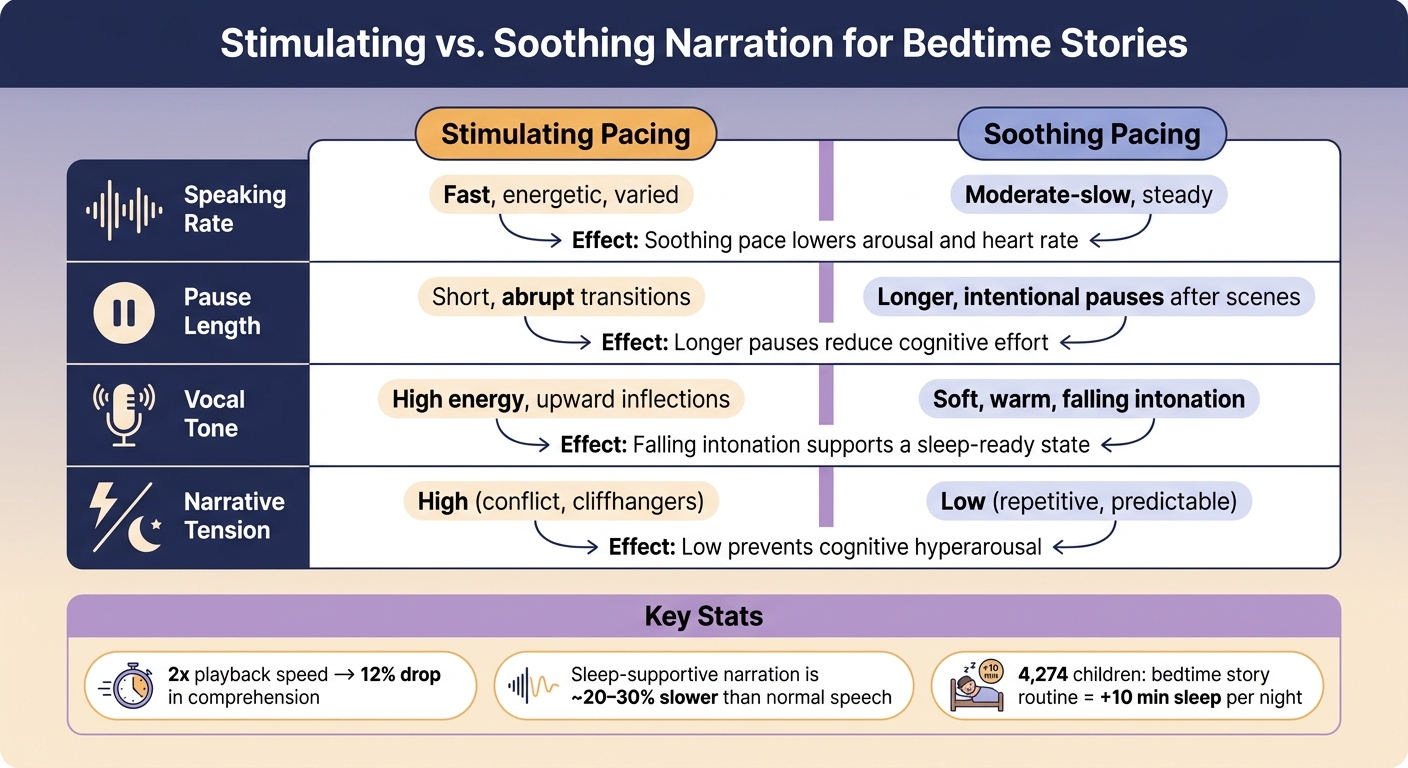
Stimulating vs. Soothing Audio Narration for Children's Bedtime Stories
Moderate pace, soft delivery, and longer pauses
The research points to a simple set of pacing choices that work well at bedtime. A moderate pace, a soft delivery, and longer pauses help children wind down. Slow, melodic speech with falling intonation supports a calmer, sleep-ready state. Fast, high-energy narration tends to do the opposite.
Low volume and gentle shifts in sound also matter. They help avoid sudden effects or abrupt transitions that can spike arousal.
"Quality voice work, clear pacing, and spare sound design matter most. Avoid jarring effects and loud transitions." - Roshni Sawhny, Co-founder, Storypie
Intentional pauses give children a moment to process each scene and stay relaxed. In a bedtime story, that little bit of breathing room can make all the difference. Instead of feeling pushed from one moment to the next, children have time to settle.
Comparison table: stimulating pacing vs. soothing pacing
In practice, the difference is easy to hear.
| Feature | Stimulating Pacing | Soothing Pacing | Effect on Children Ages 3–6 |
|---|---|---|---|
| Speaking Rate | Fast, energetic, varied | Moderate-slow, steady | Soothing pace lowers arousal and heart rate |
| Pause Length | Short, abrupt transitions | Longer, intentional pauses after scenes | Longer pauses make listening easier and reduce cognitive effort |
| Vocal Tone | High energy, upward inflections | Soft, warm, falling intonation | Falling intonation supports a calmer, sleep-ready state |
| Narrative Tension | High (conflict, cliffhangers) | Low (repetitive, predictable) | Low tension prevents cognitive hyperarousal |
Pacing by age: ages 3 to 5 vs. around age 6
For ages 3 to 5, pacing should stay very predictable and simple. Short, predictable bedtime stories with expressive prosody are easier for younger children to follow. At this stage, how the story is read often matters more than how much detail it includes.
Children closer to age 6 can usually handle a little more variation. Slightly longer stories with more descriptive variation are less likely to overstimulate them.
"Highly expressive readings resulted in better comprehension of storybooks by prekindergarten children." - Paula J. Schwanenflugel, Researcher, University of Georgia
Those patterns matter even more when the story is personalized.
How personalized narrated stories can support better pacing
Why familiar details improve calm engagement
Personalization can keep a slow story interesting without making it more stimulating. That matters because slow narration only works if the child still wants to stay with the story.
When a story includes details a child already likes - their name, favorite things, or places that feel familiar - it tends to hold attention more naturally. Personalized audio can draw a child into the story world, leaving less room for worried or busy thoughts and making it easier to settle down.
That stronger focus comes from imagination, not just sound. With audio, children build the scene in their own minds, and that can help attention stay steady even when the pacing is slow.
How Kidooki applies pacing principles in bedtime stories
Kidooki uses personalization to make calm pacing work better. Each night, it creates a new story built around a specific child - their name, their interests, and age-appropriate details - so the story feels relevant every time. That sense of familiarity helps the slower pace keep a child engaged.
The professional audio narration is also meant to stay consistent from one story to the next. When a child hears the same familiar voice night after night, they can begin to link that voice with winding down - a kind of conditioned sleep cue that builds over time.
Kidooki also keeps stories age-appropriate and free of conflict or unresolved tension, which lines up directly with the research. Sleep stories should avoid unresolved tension.
Conclusion: What parents can take from the research
The big takeaway is simple: narration shapes pacing, and pacing can shape bedtime. The three levers that matter most are speed, pauses, and tone. Sleep-supportive narration is about 20–30% slower than normal speech, with 2- to 3-second pauses between sentences.
That lines up with the comprehension data too. Faster narration doesn’t just move the story along more quickly. It can also make it harder to follow. In one 2x playback study, scores dropped by about 12%. For bedtime, slower narration is the safer pick.
Story choice matters as well. Calm, predictable stories with little conflict are more likely to work better for sleep. And there’s data behind that idea: a study of 4,274 children found that a steady bedtime routine that included a story added an average of 10 minutes of sleep per night.
For parents who want to put this into practice, Kidooki uses these pacing principles with personalized bedtime stories, professional narration, and age-appropriate content.
FAQs
How slow should bedtime narration be?
Bedtime narration should feel slow and deliberate so children can settle into sleep. A good rule of thumb is to speak about 20% to 30% slower than you would in normal conversation.
It also helps to leave 2- to 3-second pauses between sentences. Those short, steady breaks give the narration a gentle rhythm that tells a child’s brain it’s time to rest.
What kind of stories are best for sleep?
The best stories for sleep help kids settle down and get ready for rest. That usually means low-conflict plots with no big twists, scary villains, or heavy emotions.
What tends to work best? Gentle imagery, rhythmic language, and a slow easing-off of stimulation. Kidooki leans into that approach with personalized bedtime stories, age-appropriate content, and calming audio narration that can help children feel safe and relaxed.
Can a familiar voice become a sleep cue?
Yes. A familiar voice can become a strong sleep cue because kids tend to do well with predictability. When you use the same audio story as part of a steady bedtime routine, it starts to signal that it’s time to slow down and settle in.
Over time, a child may connect the beginning of that story with sleep. That can make the move from being awake and alert to feeling calm and ready for rest a little smoother and more consistent.