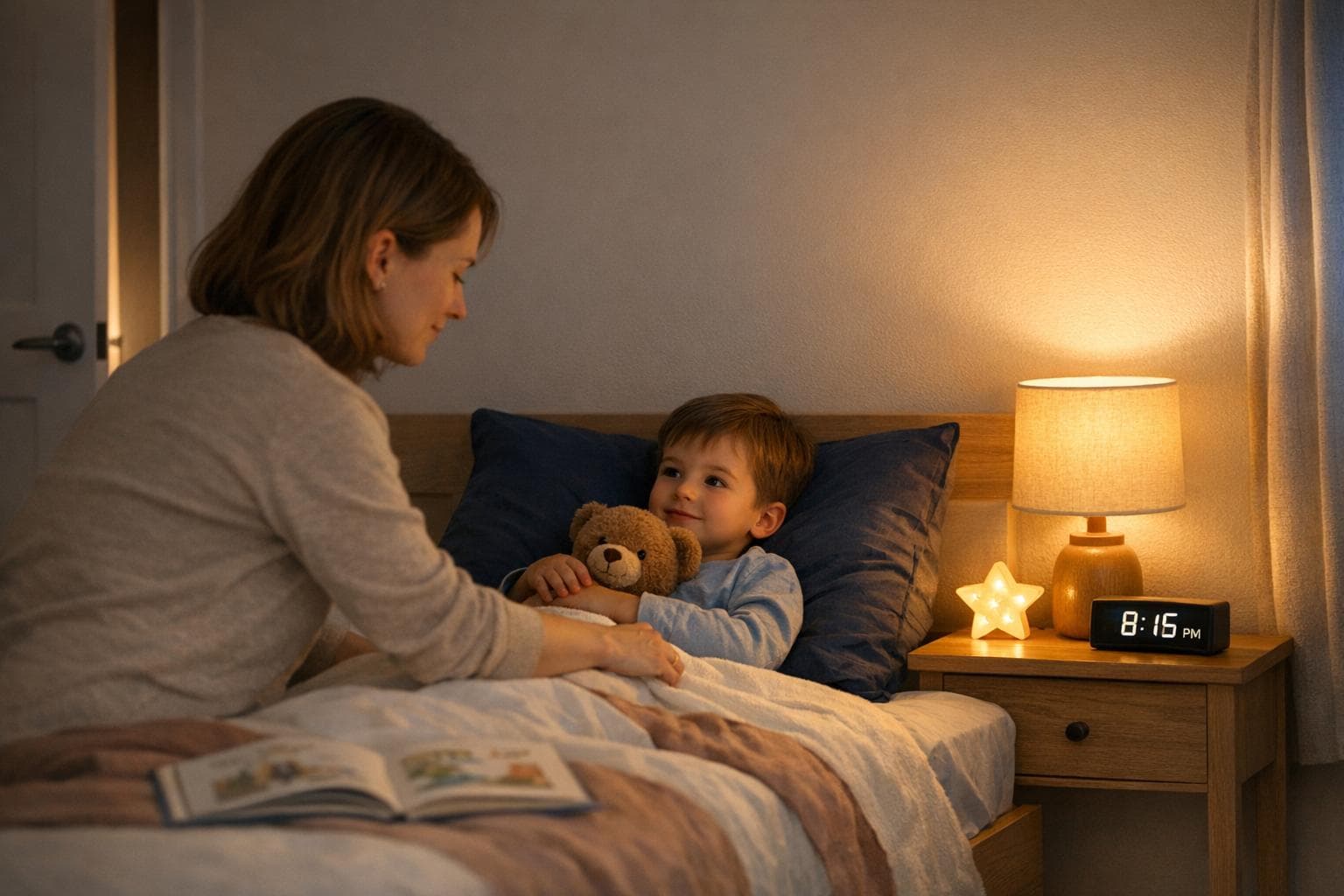
Why Do Kids Resist Bedtime? 8 Common Reasons
Struggling with bedtime battles? Kids often resist bedtime for several reasons, from separation anxiety to mismatched sleep schedules. Here's a quick breakdown of the common causes and solutions:
- Separation Anxiety: Fear of being apart from parents, especially for younger kids.
- Fear of the Dark: Nighttime worries like monsters under the bed.
- Wrong Sleep Timing: Bedtime doesn’t align with their natural sleep cues.
- Sensory Sensitivities: Overwhelmed by textures, noise, or needing more physical activity.
- Boundary Testing: Toddlers asserting independence with stalling tactics.
- Trouble with Transitions: Struggling to shift from play to sleep.
- Overtiredness: Inconsistent routines causing hyperactivity at bedtime.
- FOMO (Fear of Missing Out): Wanting more playtime or attention.
Understanding the root cause can make bedtime smoother. Solutions include consistent routines, adjusting sleep timing, and addressing specific fears or needs. Personalized bedtime stories, like those from Kidooki, can also help create a calming routine.
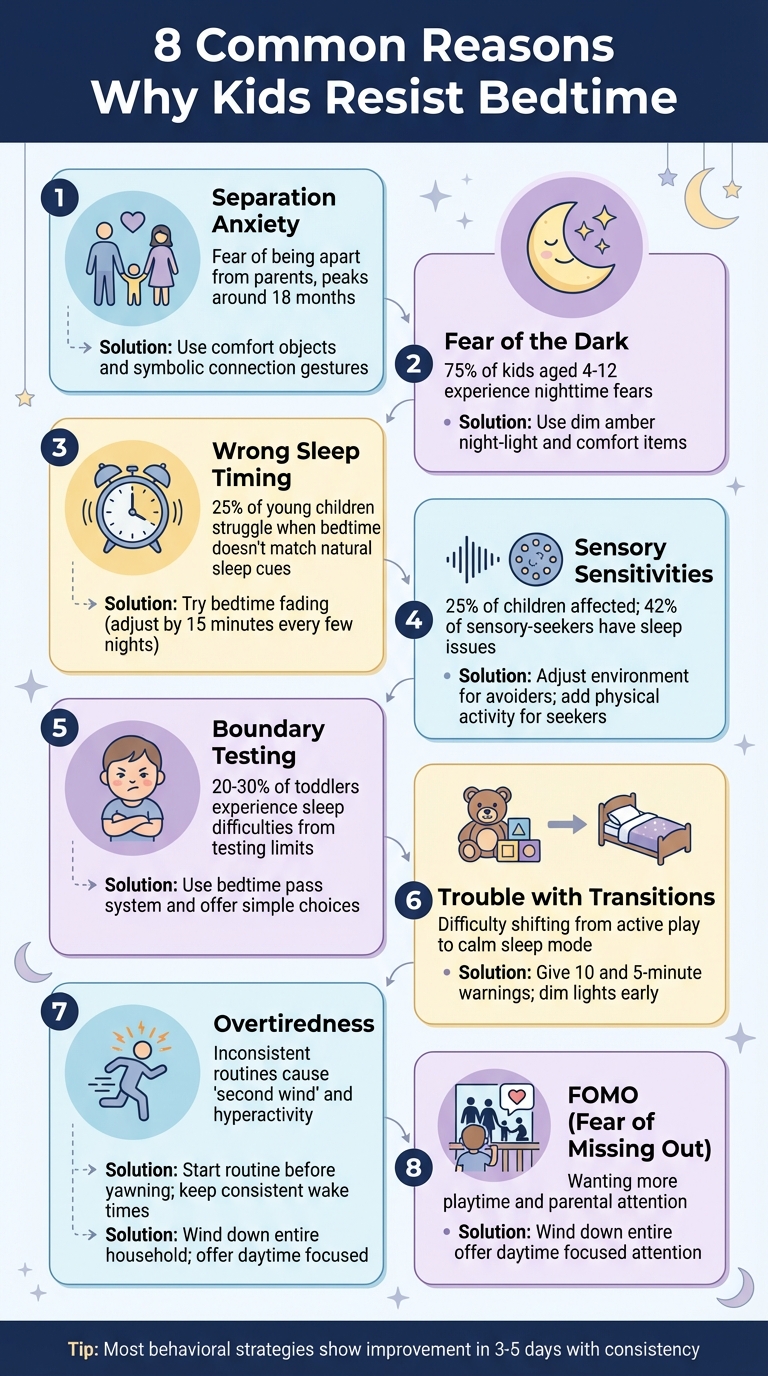
8 Common Reasons Why Kids Resist Bedtime and Solutions
Why Your Child Refuses to Sleep | How to Handle Bedtime Resistance (Sleep Doctor Tips!)
sbb-itb-d6d0693
1. Separation Anxiety
Separation anxiety is a normal developmental phase where children feel upset or uneasy when apart from their primary caregivers. It tends to peak around 18 months and can remain prominent until about age three. The sudden shift from close daytime interactions to spending 10–12 hours alone at night can provoke a strong fight, flight, or freeze response in young children.
Shannon Wassenaar, a Registered Psychotherapist, sheds light on why this happens:
"Toddlers and preschoolers especially have 'stinky' brains. Once they have a thought, it can be incredibly hard for their brains to shift gears because they're not fully developed".
For a child in this stage, the fear of a parent leaving can dominate their thoughts, making it difficult for them to hold onto the reassuring idea that they are still safe and cared for, even when apart.
As children develop a better understanding of object permanence, they begin to realize that you're simply in another room. This awareness, however, can lead to behaviors like calling out, crying, or even getting out of bed to find you. For children who are naturally more sensitive, these feelings can be even more intense compared to their more adaptable peers.
Thankfully, there are ways to help ease separation anxiety. A few simple techniques include creating a sense of connection with symbolic gestures, like matching heart handprints or talking about an "invisible string" that keeps you connected even when apart. Comfort objects, such as a beloved stuffed animal or even a T-shirt carrying your scent, can also provide reassurance. If your child has difficulty falling asleep alone, you might consider the Chair Method. This involves sitting near your child’s bed at first, then slowly moving your chair closer to the door over a few weeks until you're eventually out of the room.
Another effective approach is to acknowledge your child’s feelings with statements like, "You're worried about being alone." Spending 10–15 minutes of focused, one-on-one time earlier in the evening can also help "fill their connection cup", making bedtime less stressful. Addressing separation anxiety not only helps with bedtime routines but also builds a foundation for understanding other challenges your child might face.
2. Fear of the Dark or Nighttime Fears
Many children struggle with fear of the dark, making bedtime a challenge for families. In fact, nearly 75% of kids aged 4 to 12 experience nighttime fears, making it one of the most common concerns parents face. Fear of the dark - often called nyctophobia - is a frequent source of anxiety for children.
For preschoolers, the line between fantasy and reality can blur. What adults dismiss as imaginary, like monsters under the bed or ghosts in the closet, can feel very real to a young child’s mind . Darkness amplifies this fear, as the brain's amygdala becomes more active, making kids more alert to unexpected noises.
Dr. Laura O'Connor, MD, emphasizes the importance of taking these fears seriously:
"What may seem funny or trivial to you can feel very real to your child. When a child is scared, they can benefit from sharing it with someone."
Nighttime fears can also be triggered by scary movies, big life changes like moving or starting a new school, or even a single unsettling event - like hearing a strange noise after lights-out . These experiences can easily link darkness with danger in a child’s mind.
The key is to help your child feel brave without reinforcing their fears. Instead of repeatedly checking under the bed or in the closet, acknowledge their feelings briefly and shift the focus to their ability to handle the situation . Dr. Benjamin Mullin, a clinical child and adolescent psychologist, explains:
"When you show confidence in your child's ability to handle fear, they start to believe it too."
Here are some strategies to help ease nighttime fears:
- Spend short periods (30 seconds) in dim spaces during the day to help build their tolerance .
- Offer a favorite comfort item, like a stuffed animal or blanket, to provide security .
- Use a single, dim amber-colored night-light. Bright or blue-toned lights can interfere with melatonin production, which is essential for sleep .
If your child frequently uses stalling tactics at bedtime, try the Bedtime Pass Program. Give them one "pass" to leave their room for a specific reason, like a hug or drink of water. If they don’t use the pass, reward them in the morning .
These simple techniques can help address fears while laying the groundwork for a calming bedtime routine.
3. Wrong Sleep Timing
Bedtime battles can sometimes stem from your child simply not being ready to sleep. Around 25% of young children struggle to settle at night, often because their natural sleep cues don’t align with the set bedtime. This mismatch, much like separation anxiety or fear of the dark, plays a major role in bedtime resistance. When parents rely solely on the clock to dictate bedtime instead of tuning into their child’s natural rhythm, it can lead to frustration on both sides.
Your child’s brain releases melatonin - the hormone that signals it’s time to sleep - at a specific time each evening. For toddlers aged 30–36 months, this typically happens around 7:40 p.m.. If you try to put your child to bed before they naturally feel drowsy, you’re asking them to fall asleep during what researchers refer to as the “forbidden zone”. Dr. Monique K. LeBourgeois from the University of Colorado Boulder explains:
"Dissonance between parent-selected bedtimes and children's circadian physiology may contribute to the development of nighttime settling difficulties in early childhood."
How can you tell if your child’s sleep timing is off? If they consistently take longer than 30 minutes to fall asleep after lights-out or become hyperactive and emotional around 9 p.m., it’s a sign they may have missed their natural sleep window. Late or overly long afternoon naps can also recharge their energy too close to bedtime, making it harder for them to wind down.
One way to tackle this issue is through bedtime fading. Start by identifying your child’s natural sleep time, then gradually move bedtime earlier by 15 minutes every few nights. Combine this with exposure to bright morning light within an hour of waking and ensure naps end at least four hours before bedtime to help build sleep pressure. These adjustments can make a big difference in reducing bedtime resistance.
4. Sensory Needs or Sensitivities
Bedtime resistance in some children can stem from sensory-processing challenges, where their nervous system is either overstimulated or understimulated. Studies indicate that sensory-processing issues contribute to sleep problems in about 25% of children, with sensory-seekers facing these challenges at a higher rate - around 42%. Understanding these differences is key to creating a bedtime routine that works.
Children with sensory-processing differences generally fall into two categories: sensory avoiders and sensory seekers. Sensory avoiders are highly sensitive to their surroundings and may find things like clothing tags, certain textures, clutter, or background noise overwhelming. Shannon Wassenaar, a Registered Psychotherapist at Nurtured First, explains:
"Sensory avoiders are individuals who have a heightened sensitivity to sensory stimuli in their environment. This means that certain sounds, smells, tastes, textures, or visual stimuli can feel overwhelming or uncomfortable for them".
In contrast, sensory seekers thrive on intense sensations to feel regulated. They might fidget, slam doors, or repeatedly leave their bed because they haven’t had enough physical activity during the day.
To identify whether your child is an avoider or seeker, observe their behavior before bed. A child who becomes restless or overly playful after a sedentary day may be a sensory seeker needing more physical input. On the other hand, a child who seems irritable or prone to meltdowns after a busy or noisy day is likely a sensory avoider who has been overstimulated.
For sensory avoiders, adjustments like starting the bedtime routine 15 minutes earlier, dimming the lights, removing pajama tags, and decluttering the room can help create a soothing environment. Sensory seekers, however, may benefit from physical activities such as jumping on pillows or playful blanket wrapping before transitioning into a calmer routine. As Rachael, a Baby Sleep Expert at Hey Sleepy Baby, explains:
"Deep pressure input can calm and help regulate by activating the parasympathetic nervous system, allowing for rest and digest".
Additional strategies can also support children with sensory needs. A warm bath 1–2 hours before bed can help by temporarily raising body temperature, which then drops to signal sleepiness. White noise machines are effective for masking sudden sounds, while room-darkening curtains create a quiet, cave-like atmosphere that helps overstimulated children relax. These tailored approaches can make a world of difference in creating a calmer and more effective bedtime routine.
5. Testing Boundaries and Stalling
Bedtime often becomes a battleground for toddlers as they start asserting their independence. Studies reveal that 20% to 30% of babies and toddlers experience sleep difficulties. Much of this resistance comes from their natural urge to test limits - a developmental milestone tied to their growing sense of autonomy. Pediatric Occupational Therapist Jessica Irwin sheds light on this:
"Toddlers are wired to test boundaries, and bedtime is one of the ripest opportunities to do so. That's because bedtime signals an upcoming separation from you, and your toddler's brain isn't fully sure they're okay with that just yet."
The stalling strategies toddlers use are both predictable and creative. They might ask for "just one more" story, hug, or song. Requests for water, snacks, or extra bathroom trips are common, and older toddlers may even throw in a curveball like asking, "Where do clouds come from?" - all in an effort to keep you nearby. These actions aren’t about manipulation; they’re your child’s way of exploring how they can influence their environment and maintain a connection with you. The key to managing these tactics lies in proactive planning and consistent routines.
To get ahead of stalling, address basic needs - like hunger and thirst - before the final tuck-in. Including a small snack and a last sip of water as part of the bedtime routine can prevent these from becoming negotiation points. You can also introduce tools like a "Bedtime Pass", which allows limited requests but keeps negotiations in check. Offering simple choices, such as picking between two sets of pajamas or two bedtime books, satisfies their growing need for independence while keeping boundaries intact.
If your child leaves the bed, respond calmly and briefly. Dr. Robin Lloyd, a Mayo Clinic sleep expert, suggests using a consistent phrase like, "Mommy loves you; it's time for bed." This approach removes the reward of extra attention and often resolves the behavior within three to five days.
Dr. Sally Ibrahim, Director of Pediatric Sleep Medicine at University Hospitals Rainbow Babies & Children's Hospital, emphasizes:
"Normal development in a toddler includes learning independence and saying 'no.' As part of this development, it is not uncommon for toddlers to resist bedtime or want to draw out the process."
Next, we’ll look at how transitions play a role in shaping bedtime behavior.
6. Trouble with Transitions
Switching from playtime to bedtime isn’t just a simple shift in activities - it’s a mental adjustment that can be tough for toddlers. Dr. Robin Lloyd, M.D., Pediatrician and Sleep Specialist at Mayo Clinic, explains:
"Toddlers are at an age where they are gaining more verbal skills. They have increased awareness of things around them - and amazing curiosity."
When you announce it’s time for bed, you’re essentially asking your child to stop doing something fun and move into a calmer, less stimulating routine. That’s not always easy for a young mind to process.
You might notice your toddler running away when it’s time to put on pajamas, dragging out every step of the routine, or ignoring reminders altogether. Some kids may even have emotional outbursts at the mere mention of bath time. These behaviors aren’t about being difficult - they’re signs that your child’s brain is struggling to make the transition.
To ease this shift, try using consistent ten- and five-minute warnings before bedtime. Pair these countdowns with environmental changes, like dimming the lights, speaking in softer tones, and turning off electronics at least an hour before bed.
For children who frequently leave their room after bedtime, Kate Lyn Walsh, PsyD, Assistant Professor of Clinical Pediatrics at Riley Hospital for Children, suggests a "Bedtime Pass" system. She explains:
"Kids respond really well to concrete limits, and the passes can help reduce anxiety at bedtime if they won't get in trouble for getting up. It's also helpful for parents because they know when to put their foot down."
The Bedtime Pass gives your child a set number of "free passes" to leave the room for things like water or bathroom trips. Before tucking them in, address all basic needs - bathroom, water, snacks - to minimize stalling tactics. If your child does use a pass, calmly redirect them back to bed without engaging in extended discussions or negotiations.
7. Overtiredness from Inconsistent Routines
One major culprit behind bedtime resistance is overtiredness caused by inconsistent routines.
It might seem counterintuitive, but skipping a regular bedtime can make kids more wired instead of sleepy. This phenomenon, often called the "witching hour", leaves many parents scratching their heads. Dr. Robin Lloyd from Mayo Clinic sheds light on this:
"This is when young kids are staying up later and later and they get more hyper and emotional. When toddlers are butting up against that, it makes it harder for them to settle down to sleep".
Unlike adults who tend to slow down when overtired, children often experience a "second wind", becoming hyperactive and emotionally unpredictable. This behavior is especially common when bedtime routines vary from night to night. Even small shifts, like later bedtimes on weekends, can disrupt a child’s internal clock. Research highlights that waking up more than an hour later on weekends can make it harder to maintain a consistent sleep schedule during the week. Experts sometimes refer to this mismatch as "circadian dissonance".
Kate Lyn Walsh, PsyD, from Riley Hospital for Children, explains the impact:
"With kids, you tend to see more irritability, grouchiness and emotional dysregulation".
Overtiredness can also lead to bedtime stalling tactics - those endless requests for water, another story, or a final hug. These "curtain calls" are often signs that a child’s brain is too exhausted to self-regulate.
To help avoid overtiredness, it’s essential to start the bedtime routine before your child shows obvious signs of sleepiness, such as yawning. The Sleep Foundation advises:
"Overtired children can be hyperactive or grumpy and will find it even harder to fall asleep, so try to start the routine before they start yawning".
If your child’s bedtime has crept too late, try adjusting it gradually by 15-minute increments. Keeping wake-up times consistent - within about an hour of the usual weekday time, even on weekends - can also make a big difference.
8. Wanting More Independence or Playtime
As kids grow, their desire for independence kicks into high gear - bedtime often becomes a battleground for asserting control. For toddlers, resisting sleep can feel like their way of saying, "I’m in charge!" A simple phrase like "it’s time for bed" might come across as a loss of power. This phase is completely normal as children explore autonomy and test their ability to influence their surroundings.
There’s also the classic case of FOMO (fear of missing out). If the rest of the household is still buzzing - parents chatting, siblings playing, or the TV humming in the background - it’s no surprise your child feels like they’re missing out on the action. Dr. Jason Sherman, Pediatric Sleep Specialist at Cleveland Clinic, explains:
"Kids want to explore and spend time with people. But what children want and what they need are two different things - and what they need at night is sleep".
On top of that, bedtime can carry emotional weight. In busy households, the moments before bed might be the only time a child gets undivided attention from their parents. Dr. Bill Sears highlights this dynamic:
"Children do what they do in order to meet their needs. Unless they are angry or have a distant parent-child relationship, kids don't use bedtime ploys deliberately to annoy parents".
Often, they’re just trying to squeeze in a little more connection time. Understanding this can help parents create strategies that respect a child’s need for independence while keeping bedtime peaceful.
One way to balance this is by offering small choices within clear limits. Let your child decide between two sets of pajamas or pick the first bedtime story. Danielle Pacheco from the Sleep Foundation advises:
"Toddlers will also try to assert their newly found independence by acting out or resisting bedtime. You can head off their stalling tactics by letting them make some of their own decisions".
These small decisions can give kids a sense of control, which often reduces pushback. Some parents also find success with a "bedtime pass" system, where kids can make a limited number of specific requests.
To tackle FOMO and help your child feel more at ease, consider winding down the entire household 30 to 60 minutes before bedtime. Lower the lights, quiet the noise, and turn off screens so your child doesn’t feel like they’re missing out on the fun. During the day, make time for focused attention and physical affection to fill their emotional bucket, reducing their need to stretch out bedtime for extra connection.
How Personalized Bedtime Stories with Kidooki Can Help

If bedtime feels like a nightly struggle, there’s a creative solution to make things easier: personalized bedtime stories. Kidooki offers custom stories where your child takes center stage as the main character, paired with calming narration and engaging illustrations. Each evening, your child gets a new story tailored to their age and preferences, helping to create the kind of consistent bedtime routine that experts say is key to smoother transitions to sleep.
Why does this matter? Bedtime challenges are common for many families, and it can take toddlers anywhere from 30 to 45 minutes to fall asleep. A predictable wind-down routine, like reading stories, signals the brain that it’s time to rest, making the shift from playtime to sleep much easier. Amber LoRe, Director of Pediatric Expertise at Huckleberry, highlights the importance of routines:
"Predictable pre-sleep routines can help even young babies understand when it is time to end play and transition to sleep".
Personalized stories also address specific nighttime hurdles, such as separation anxiety or fears of the dark. Hearing their own name in a story can comfort children and help them process worries about being alone. The soothing narration provides a low-stimulation alternative to screens or high-energy activities, which can otherwise delay sleep. Plus, when kids see themselves as the hero of their own adventure, bedtime resistance often fades away.
You can try this calming routine today. Kidooki offers a free trial - no credit card required - so you can see how personalized bedtime stories work for your family. After the trial, subscription plans unlock nightly new stories, profiles for multiple children, and an extensive library for saving favorites.
Conclusion
Bedtime resistance often isn’t about defiance - it’s a signal of an underlying need. Whether your child is dealing with separation anxiety, nighttime fears, mismatched sleep schedules, sensory sensitivities, boundary testing, or simply struggling with transitions, understanding the root cause is key to finding a solution. As Robin Lloyd, M.D., a pediatric sleep expert at Mayo Clinic, explains:
"Kids are constantly changing beings - going through different developmental stages and different growth stages and responding to their environments in different ways".
Once you identify the cause, you can tailor your approach. For instance, an anxious child might need extra comfort and reassurance, while a child seeking attention could benefit from a bedtime pass or an adjusted routine that meets their needs before lights out. Addressing these behaviors now helps build lasting self-regulation skills.
Consistency is crucial. Studies show that when parents stick to behavioral strategies, noticeable improvements in sleep habits often occur within just 3 to 5 days. Whether it’s creating a soothing bedtime routine, setting firm yet fair boundaries, or making bedtime more engaging with personalized stories, the effort you put in now can make a lasting difference.
For a tool that supports these efforts, consider personalized bedtime stories from Kidooki. These stories are designed to create a calming and predictable routine while empowering children to embrace bedtime. You can even try their free trial (no credit card required) to see how it transforms your evenings.
FAQs
What’s the fastest way to figure out why my child fights bedtime?
The fastest way to figure out why your child resists bedtime is to pay close attention to their behavior and habits during the lead-up to sleep. Are they scared of the dark? Feeling anxious about being apart from you? Craving extra attention? Spotting these signs is key. Establishing a steady, soothing routine - like reading a story or having quiet time together - can help you identify the issue and tackle it in a way that works for everyone.
When should I worry that bedtime resistance is a bigger sleep problem?
Bedtime resistance can sometimes hint at a deeper sleep issue, especially if it persists despite sticking to consistent routines. If it leads to noticeable distress, behavioral challenges, or your child has ongoing difficulty falling or staying asleep, there may be more at play. These patterns might indicate potential sleep disorders or emotional struggles. If the problem continues, reaching out to a healthcare professional for advice could be a helpful next step.
How do I handle bedtime battles without creating new bad habits?
To handle bedtime challenges without creating unwanted habits, focus on building a steady, relaxing routine. Include calming activities such as a warm bath, reading a favorite story, or playing gentle music. Keep the surroundings quiet and stick to the same bedtime each night. Rather than engaging in power struggles or relying on big rewards, aim for a firm but kind approach. Over time, this consistency helps your child connect the routine with sleep. You might also find it helpful to keep a sleep diary to spot patterns or habits that may be causing resistance.