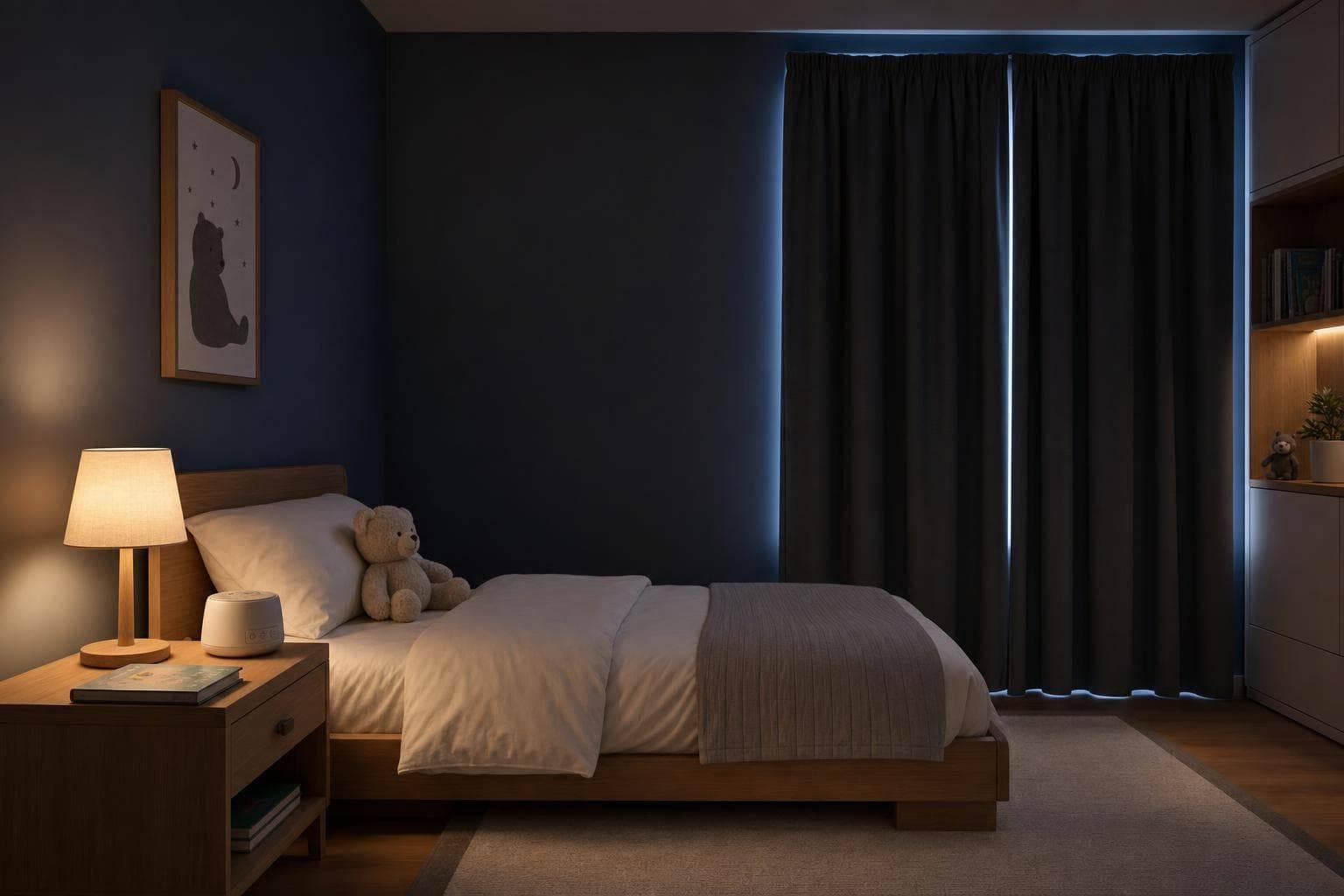
Ultimate Guide to a Calm Sleep Environment
A child’s sleep setup can change bedtime fast: dark room, cool air, low noise, fewer distractions, and the same routine each night.
I’d boil the whole article down to this: if your child is fighting sleep, waking often, or getting up too early, I’d first check light, room temperature, sound, clutter, and the last 30–60 minutes before bed. Even 1 hour of room light can strongly suppress melatonin in preschoolers, and sleep guidance often points to 60–67°F for the bedroom.
Here’s the short version:
- Match sleep to age: kids need about 9–16 hours in 24 hours, depending on age
- Make the room dark: blackout curtains, covered LEDs, and only a dim red or amber night-light if needed
- Keep the room cool and steady: aim for 60–67°F, with sound kept low and even
- Cut visual stimulation: store toys out of sight and keep the sleep space simple
- Use a set wind-down: dim lights, no screens for 60 minutes, bath, pajamas, teeth, story, lights out
- Track one change at a time: test it for at least 3 nights, and give the full plan 1–2 weeks
- Get help if red flags show up: loud snoring, gasping, strong daytime sleepiness, or no change after 6 weeks
| Area | What I’d focus on | Target |
|---|---|---|
| Light | Blackout setup, dim warm light | Very dark at sleep time |
| Temperature | Cooler room, lighter bedding if needed | 60–67°F |
| Sound | White noise, fan, or soft steady sound | 50–60 dB or lower |
| Routine | Same steps, same order | 30–60 minutes |
| Screens | Phones, tablets, TV off | 60 minutes before bed |
| Follow-up | Sleep log, one change at a time | 3 nights to 2 weeks |
The main idea: I’d treat the bedroom and bedtime routine as one system. When both send the same “time for sleep” message, kids often settle with less pushback and sleep more smoothly.
How to Improve Your Child's Sleep
sbb-itb-d6d0693
Understand Your Child's Sleep Needs First
Once the room cues are set, line them up with your child's age and sleep window. Start with how much sleep your child needs, then shape the room and bedtime routine around that.
Sleep Needs by Age and Signs the Setup Is Not Working
Sleep needs change as kids grow. Here’s a quick guide based on AASM/AAP guidance:
| Age Group | Recommended Total Sleep (24 hrs) | Includes Naps? |
|---|---|---|
| 4–12 months | 12–16 hours | Yes |
| 1–2 years | 11–14 hours | Yes |
| 3–5 years | 10–13 hours | Yes |
| 6–12 years | 9–12 hours | No |
If your child is showing certain signs, the current setup may not match what their body needs.
Sometimes the signs are easy to miss. A child who isn’t sleeping well might look wired instead of tired. They may get more emotional, have a tougher time waking up, struggle to focus, or have a hard time settling down when things don’t go their way. On the physical side, sweating can hint that the room is too warm or that bedding is holding in too much heat. Frequent waking at night can point to the same issue.
Stalling at bedtime matters too. If your child keeps asking for one more sip of water or one more trip to the bathroom, that can be a sign the room or routine isn’t helping them settle well enough.
Sleep Habits for Young Children
Sleep habits are the day-to-day patterns and room conditions that make it easier for kids to fall asleep and stay asleep. For young children, that usually means:
- A steady bedtime and wake time within 15–30 minutes, even on weekends
- A 30–60 minute wind-down before bed
- A bedroom used mostly for sleep and other calm activities
Sticking with that rhythm helps limit weekday-to-weekend sleep shifts.
Tablets, TVs, and phones can delay sleep because they suppress melatonin. A screen-free buffer of at least 60 minutes before bed can help lower that effect. It also helps to keep toys out of sight at bedtime, so the bed stays linked with sleep, not play.
Once the target is clear, use the room and routine to support it.
Set Up the Bedroom for Better Sleep
Once you know your child’s sleep window, the bedroom can do a lot of the heavy lifting. The goal is simple: cut down on stimulation and shape the room around your child’s light, sound, and comfort needs.
Light: How to Make the Room Dark and Dim at Night
Darkness helps the body release melatonin. A good rule of thumb: if your child can clearly see their hand at arm’s length, the room still has too much light.
Blackout curtains or shades can help, but make sure they’re rated for total blackout, not just room darkening. That small difference matters. Light often sneaks in through the edges, so it helps to seal gaps with Velcro strips or blackout tape. You can also add a draft stopper or weather stripping at the door to block hallway light. Even tiny LEDs on clocks, sound machines, or chargers can stand out at night, so cover them with electrical tape.
If your child feels better with a little light, go with a dim red or amber night-light. Place it low to the ground and angle it away from their face. Those light wavelengths have the least effect on melatonin. A dimmer switch also makes the wind-down easier - start lowering the lights about 30–60 minutes before bedtime.
Once light is under control, the next piece is keeping sound and temperature steady.
Noise, Temperature, and Bedding: Keep the Room Steady and Comfortable
Some kids sleep best with white noise. Others do better with a fan or soft music. The best pick is usually the one that stays steady in your home night after night.
| Sound Option | Pros | Cons |
|---|---|---|
| White Noise Machine | Consistent; masks sudden household noises | Some digital loops can be distracting to sensitive ears |
| Fan | Natural sound; adds air circulation | Can be too cool in winter; inconsistent volume |
| Soft Music/Lullabies | Soothing during the transition to sleep | Can become a sleep prop - child may need it restarted if they wake |
Keep the volume at 50–60 decibels or lower, and place the machine across the room from the bed. For temperature, most sleep guidance points to 60–67°F. Bedding matters too. Wash sheets and other bedding every 1–2 weeks, and try to keep humidity in the 30%–50% range.
With sound and comfort handled, the next thing to fix is what your child sees.
Layout and Clutter: Set Up a Simple Sleep Zone
Visible clutter can keep a child alert longer than you’d think. A room full of toys, colors, and piles sends the opposite signal of “time to sleep.” Closed storage helps by keeping toys out of sight and cutting down on nighttime stimulation. Fabric bins and drawer organizers are an easy fix.
Bed placement can also make a difference. Try to keep the bed:
- Away from windows to cut drafts and early morning light
- Away from vents or radiators for a steadier room temperature
- Away from the door to reduce hallway noise and light
Here’s a quick look at common bed setups:
| Bed Position | Benefit | Consideration |
|---|---|---|
| Away from Windows | Reduces drafts, noise, and early morning light | May limit layout options in small rooms |
| Against a Solid Wall | Creates a sense of security and grounding | Avoid hanging heavy decor directly above |
| Away from the Door | Minimizes disruption from hallway noise and light | Keep a clear path for nighttime navigation |
| Corner Placement | Creates a cozy nook feeling | Can make changing sheets more difficult |
Keep decor simple and low-contrast. In plain terms, the room should feel calm, not busy. The more sleep-focused the space feels, the easier it is for your child’s brain to connect that room with rest.
When the room feels calm, the bedtime routine can start doing its job even better.
Build a Bedtime Routine That Supports Calm
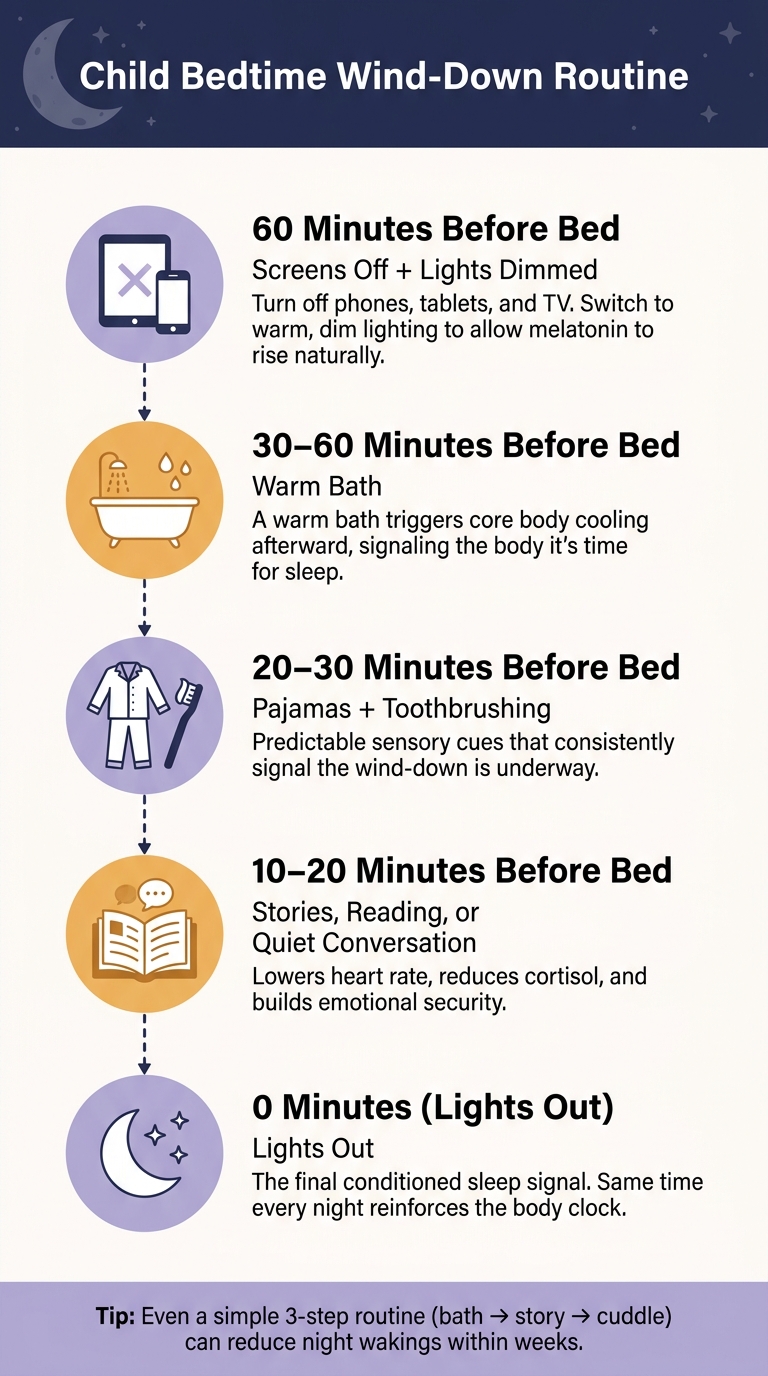
Child Bedtime Wind-Down Routine: Step-by-Step Sleep Schedule
A calm routine helps bedtime feel predictable. Think of the wind-down as a sleep signal, not a box to check off. When the same steps happen in the same order each night, your child’s brain starts getting ready for sleep before their head even touches the pillow. And once the room is dark, quiet, and cool, those cues land even more strongly.
A Simple 30–60 Minute Wind-Down Sequence
Start the shift about 60 minutes before lights-out so the body has time to move toward sleep. Begin by dimming the lights and switching to warm light. Keeping screens off during that last hour gives the routine space to do its job.
A warm bath 30–60 minutes before bed can help the body cool afterward and get ready for sleep. Then move into pajamas. A small choice, like picking between two pairs, can cut down on pushback. After that, do toothbrushing. End with 10–15 minutes of reading, a made-up story, or quiet conversation. That can lower cortisol and help your child feel safe and settled.
| Time Before Lights-Out | Activity | Why It Helps |
|---|---|---|
| 60 minutes | Screens off, lights dimmed | Allows melatonin to rise naturally |
| 30–60 minutes | Warm bath | Triggers core body cooling |
| 20–30 minutes | Pajamas + toothbrushing | Predictable sensory cues that signal winding down |
| 10–20 minutes | Stories, reading, or quiet conversation | Lowers heart rate and builds emotional security |
| 0 minutes | Lights out | Final conditioned sleep signal |
Even a simple three-step routine - bath, story, cuddle - has been shown to cut night wakings and lengthen continuous sleep within a few weeks.
Comfort Objects, Sensory Cues, and Dropping Screens Before Bed
Once the main routine is set, add only a few cues that help your child feel safe. For children over one year old, a favorite stuffed animal or blanket can work as a comfort object and help them settle when you’re not in the room.
Soft textures, like a plush blanket, can make the whole process feel familiar and soothing. If you want to use scent, keep it light and child-safe. Lavender or chamomile may lower heart rate and support relaxation. Steady white or brown noise can cover household sounds and help prevent waking from sudden noise in the home.
That 60-minute screen-free buffer before bed gives the routine room to work. Good swaps include books, quiet conversation, a hug that lasts at least 30 seconds, or calm audio stories. If your child pushes back when screens are turned off, the "Bedtime Pass" can help. Give them one physical card they can trade for a single extra request, like a glass of water or one more hug. After they use it, the limit stays in place.
Use the steps that settle your child best, then keep the routine short and easy to repeat.
Use Storytelling, Track Results, and Adjust Over Time
How Personalized Bedtime Stories Help Children Settle
Once the room feels right and the routine is set, stories can serve as the last calm signal before sleep. A bedtime story helps mark the end of the day and the start of rest. Consistent bedtime rituals can cut the time it takes for a child to fall asleep by up to 37%. And when the child is part of the story, bedtime often feels more familiar and less like a battle.
Kidooki fits best into the final 5–15 minutes of wind-down time. It offers personalized, audio-first bedtime stories with your child's name, interests, professional narration, calming illustrations, and profiles for multiple children.
Track What Works and Know When to Get Help
After you pick the bedtime cues that seem right for your child, make one change at a time. Then give the routine 1–2 weeks before you judge it. After that, look for more steady sleep over the next few weeks.
A simple sleep log can make patterns easier to spot. Each night, write down:
- Bedtime and wake time
- Number of night wakings
- Your light and sound setup
- Which routine steps you used
Here’s the rule that matters most: change only one variable at a time, then keep it the same for at least three nights before you tweak anything else. Otherwise, it gets hard to tell what’s helping and what’s just noise. Your child’s morning mood is often the clearest sign of whether the previous night’s sleep was good quality.
If you’ve kept a steady routine for six weeks and nothing has improved, talk with your pediatrician or a pediatric sleep specialist. The same goes if your child snores loudly, gasps during sleep, seems very sleepy during the day, or shows behavior or mood problems tied to poor sleep. Those signs can point to a sleep issue that needs medical evaluation.
FAQs
What if my child is afraid of a dark room?
If your child is scared of the dark, a nightlight can make bedtime feel a lot less stressful. Go with a dim red or amber light. Skip blue or white light, since those can suppress melatonin and keep the brain alert.
It also helps to keep the light steady. A nightlight that changes colors through the night may look fun, but it can make it harder for your child to settle down. Kidooki’s personalized bedtime stories can help too, adding a safe, calming feel to the bedtime routine.
How long should I try changes before expecting results?
You may notice changes within a few days, but sticking with the routine matters most. A steady sleep setting and bedtime pattern help send a clear message that it’s time to rest.
If progress feels slow, stay with the routine and keep it within the recommended 30 to 45 minutes so it helps your body wind down.
When should I talk to a pediatrician about sleep problems?
Talk to your pediatrician if your child keeps having trouble sleeping.
It’s also smart to check with a doctor before using certain sleep aids, like weighted blankets. The same goes for making changes to a crib if your baby has been diagnosed with gastroesophageal reflux.