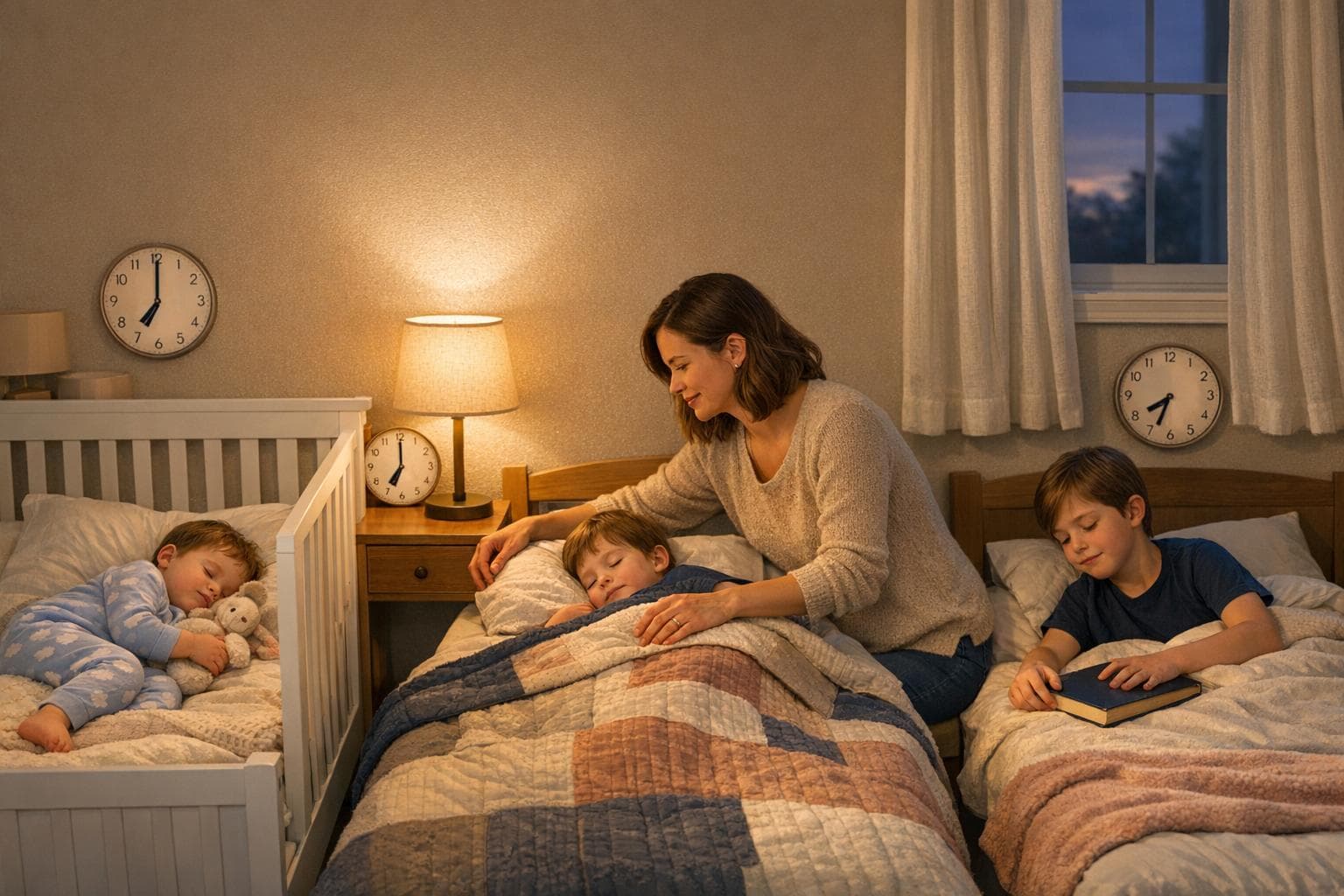
What Age Should Kids Go to Bed? Expert Answers
Children's bedtime depends on their age and developmental needs. Here's a quick guide:
- Toddlers (1-2 years): Need 11–14 hours of sleep (including naps). Bedtime: 6:00 PM – 7:30 PM.
- Preschoolers (3-5 years): Require 10–13 hours of sleep. Bedtime: 7:00 PM – 8:30 PM.
- School-aged kids (6-12 years): Need 9–12 hours of sleep. Bedtime: 7:15 PM – 9:00 PM.
Sleep is essential for growth, learning, and emotional health. A consistent bedtime routine, screen-free wind-down time, and a sleep-friendly environment help ensure kids get the rest they need. If your child struggles with bedtime or night wakings, small adjustments like earlier bedtimes or calming rituals can make a big difference.
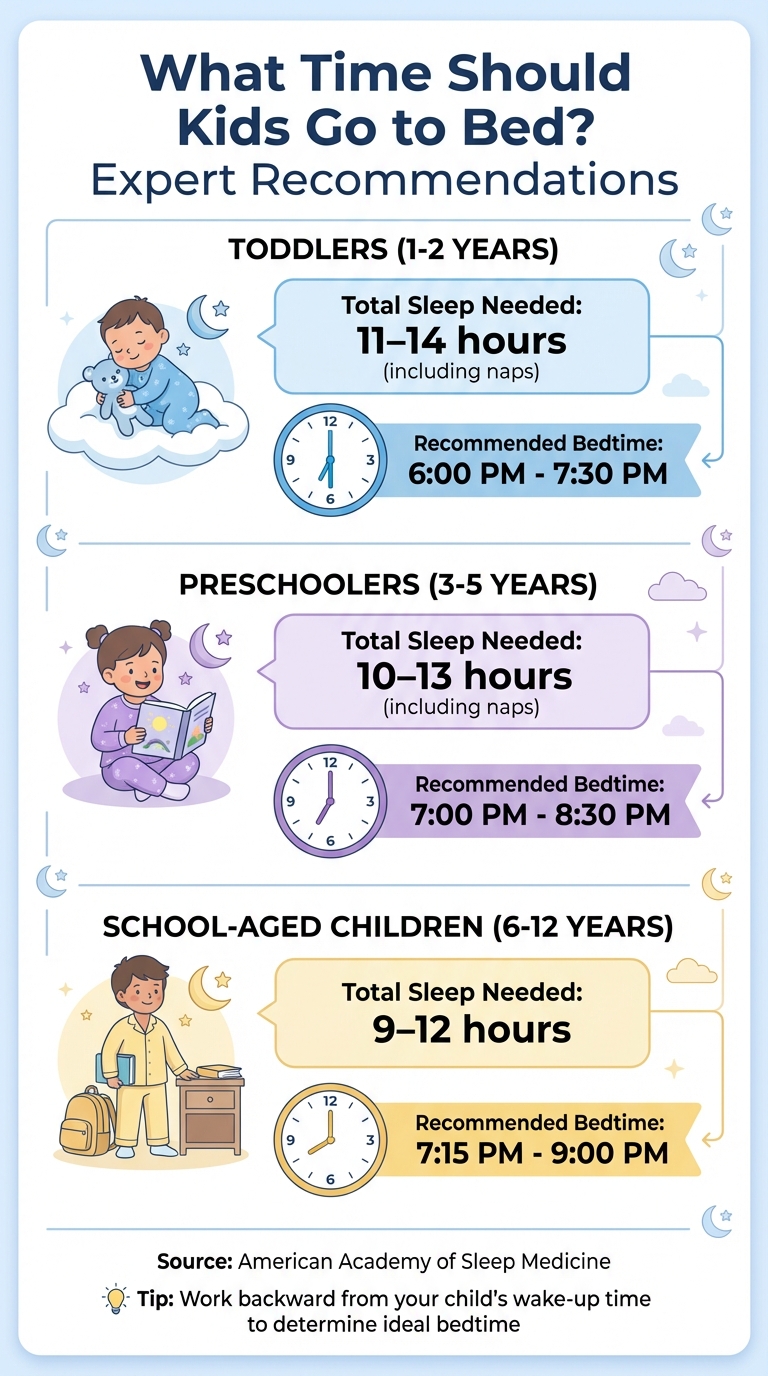
Recommended Bedtimes and Sleep Hours by Child Age Group
😴 What Time Should Kids Go to Bed? | Age-by-Age Bedtime Guide 🌙✨
sbb-itb-d6d0693
Bedtime Recommendations by Age
The American Academy of Sleep Medicine has outlined clear sleep duration guidelines for children at different stages of development. To determine the right bedtime, start by working backward from your child's wake-up time - whether it’s for daycare, school, or your family’s morning routine.
Sticking to a consistent sleep and wake schedule, even on weekends, helps maintain your child’s internal body clock, reducing disruptions to their natural rhythm.
"Consistency also is key when adjusting to a sleep schedule, even on the weekends." – Lee J. Brooks, M.D., FAAP, AASM panel member
Here’s a breakdown of sleep recommendations by age:
| Age Group | Total Sleep Needed (24 hours) | Recommended Bedtime Range |
|---|---|---|
| Toddlers (1-2 Years) | 11–14 hours (including naps) | 6:00 PM – 7:30 PM |
| Preschoolers (3-5 Years) | 10–13 hours (including naps) | 7:00 PM – 8:30 PM |
| School-Aged (6-12 Years) | 9–12 hours | 7:15 PM – 9:00 PM |
Below are more detailed bedtime recommendations for each age group.
Toddlers (1-2 Years)
Toddlers need 11 to 14 hours of total sleep, including naps, within a 24-hour period. Around 18 months, most toddlers transition to taking just one nap in the afternoon, making nighttime sleep even more critical. Bedtimes between 6:00 PM and 7:30 PM typically work well, as toddlers are natural early risers.
If your toddler skips a nap or has a shorter one than usual, consider moving bedtime earlier by 30 to 60 minutes to avoid overtiredness. Watch for common signs like fussiness, crying, or eye rubbing - these are cues that it’s time to start their bedtime routine.
Preschoolers (3-5 Years)
Preschool-aged children typically need 10 to 13 hours of sleep daily. During this stage, many children begin to nap less often or stop napping altogether, usually between the ages of 3 and 5. If your preschooler no longer naps, their nighttime sleep should make up for the lost rest. A bedtime between 7:00 PM and 8:30 PM is generally ideal.
When your child stops napping, gradually shift bedtime earlier by 15–30 minutes to help them adjust. These small changes pave the way for healthy sleep habits as they grow older.
School-Aged Children (6-12 Years)
Children aged 6 to 12 need 9 to 12 hours of sleep each night. With school start times often around 7:00 AM or 8:00 AM, bedtimes should fall between 7:15 PM and 9:00 PM, depending on when your child needs to wake up. For example, if your child needs to wake at 7:00 AM and requires 10 hours of sleep, lights-out should be no later than 9:00 PM.
If your child struggles to wake up in the morning or seems irritable and hyperactive during the day, they may not be getting enough sleep. According to the American Academy of Sleep Medicine, "regularly sleeping fewer than the number of recommended hours is associated with attention, behavior, and learning problems". Proper sleep timing plays a crucial role in helping your child stay focused, manage emotions, and succeed academically.
What Affects Your Child's Bedtime
When it comes to determining your child's bedtime, age-based guidelines are just the beginning. Several factors - ranging from developmental changes to individual habits - play a role in shaping the perfect sleep schedule for your little one. Let’s dive into what influences bedtime and how you can adapt to your child’s needs.
Development and Sleep Patterns
A child's brain and body go through constant changes, and these shifts directly impact their sleep needs. For instance, infants, especially those born prematurely, may sleep up to 90% of the day to support their rapid growth and development.
As children grow, developmental milestones can disrupt previously smooth sleep routines. Between 8 and 12 months, many babies experience separation anxiety and begin to understand object permanence, which might make bedtime a challenge. Similarly, toddlers often test boundaries as they learn to walk and talk, using their newfound skills to delay bedtime or escape their rooms.
Dr. Marc Weissbluth, an Associate Professor of Pediatrics, likens bedtime to surfing:
"Helping your child fall asleep is like surfing: You want to catch the wave of drowsiness as it's rising, before your baby crashes into an overtired state." – Marc Weissbluth, MD
Missing this "wave" can lead to what experts call the "overtiredness paradox." Dr. David Gozal, Director of the Comprehensive Sleep Medicine Center at Tulane University Hospital, explains:
"Instead of becoming quiet and somnolent, as adults do, kids become hyperactive and out of control [when sleep deprived]"
This "second wind" is a clear sign that bedtime has passed, and the body is now compensating with a burst of energy.
Daily Schedules and Activities
While school start times are fixed, evening routines often vary, with homework, extracurriculars, and family obligations pushing bedtimes later than ideal. Unfortunately, this can lead to chronic sleep deprivation, as children still need to wake up early regardless of how late they go to bed.
Dr. Mary Carskadon, a Professor of Psychiatry and Human Behavior at Brown University, emphasizes:
"Families must prioritize sleep by scheduling dedicated wind-down time."
If your child is juggling multiple after-school commitments, it’s worth reviewing their daily schedule. Are activities or homework eating into their sleep? Household noise or overstimulation late in the evening can also make it harder for kids to fall asleep, further reducing their overall rest. Striking a balance between activities and rest is essential for maintaining healthy sleep habits.
Individual Differences
Every child has their own sleep rhythm. While some are naturally early risers, others lean toward being night owls - even as early as preschool. Paying attention to your child’s natural cues can help you identify their ideal bedtime. Signs like eye rubbing, yawning, fussiness, or a quieter demeanor often signal it’s time to start winding down.
Some children can self-soothe and fall asleep with little help, while others might need more structure to settle down. Health conditions such as ADHD, autism, allergic rhinitis, or enlarged tonsils and adenoids can also affect sleep patterns. For instance, high-energy kids may benefit from plenty of physical activity during the day but require a longer wind-down period - at least 30 to 60 minutes without screens or active play - to prepare for bed.
How to Create Healthy Sleep Routines
A simple, predictable bedtime routine can work wonders for improving sleep. Research indicates that sticking to the same set of activities each night helps children fall asleep faster and stay asleep longer, even after just a few nights of consistency.
Consistent Bedtime Rituals
Experts often recommend the "4 B's" framework: Bathing (a warm bath or quick face wash), Brushing (teeth), Books (reading under soft lighting), and Bed (tucking in). This process typically takes 20–45 minutes, depending on the child’s age. Dr. Lynelle Schneeberg, a pediatric sleep psychologist, explains the reasoning behind this approach:
"When you have a routine that's the same every night, the child starts to relax and get sleepy; those responses are reliably cued or triggered." – Lynelle Schneeberg, Psy.D.
Starting the routine about an hour before bedtime can help prevent overtiredness. To avoid bedtime battles, limit choices - like letting kids pick between two pajama options - so they feel in control without dragging out the process. For kids who stall with extra requests (like more hugs or water), try a "bedtime ticket" system: give them two cards to exchange for final requests. Once the tickets are used, the routine is finished.
Screen-Free Wind-Down Time
After the bedtime rituals, transitioning to a screen-free wind-down is key to preparing both the mind and body for sleep. Turn off all screens - TVs, tablets, and phones - at least one hour before bed. The blue light from these devices suppresses melatonin, the hormone that tells your body it’s time to sleep. Dr. Stephen Hawkins, a pediatric sleep specialist, explains:
"Screens trick your brain into thinking it's daytime, and if it's daytime, your brain is not going to let you fall asleep." – Stephen Hawkins, MD
Instead of screen time, encourage quiet activities like puzzles, drawing, or reading. Gradually dim the lights around the house during this time to signal the body to start producing sleep hormones. This gentle shift from active play to calm activities helps children ease into rest mode naturally.
Creating the Right Sleep Environment
A structured routine works best when paired with a sleep-friendly bedroom. Keep the room cool (around 65°F), dark, and quiet to support the body’s natural cooling process during sleep. Use blackout curtains to block out light, and if your child is afraid of the dark, a dim nightlight is fine. White noise machines or fans can help drown out disruptive sounds.
Follow the "2 a.m. Rule": make sure the room looks and sounds the same in the middle of the night as it did when your child first fell asleep. For instance, if you use a white noise machine or fan at bedtime, keep it on throughout the night to maintain consistency and avoid nighttime anxiety. For children over one year old, a comfort object like a favorite stuffed animal or blanket can provide reassurance and encourage independent sleep. Finally, always place your child in bed while they’re drowsy but still awake. This helps them learn to self-soothe and fall asleep on their own.
Benefits of Getting Enough Sleep
When kids consistently get the rest they need, their brain and body thrive in ways that directly support learning, emotional balance, and physical growth.
Better Learning and Focus
REM sleep plays a key role in how the brain processes and stores information. Without enough sleep, children may have trouble with basic tasks like following directions, solving problems, or staying focused. Interestingly, a tired child might seem "wired" rather than sleepy, which can confuse parents and teachers alike.
A survey revealed that 24% of teenagers who didn’t get enough sleep experienced a significant drop in academic performance. The American Academy of Sleep Medicine also highlights that not meeting recommended sleep hours is closely tied to attention, behavior, and learning challenges. Beyond improving cognitive function, adequate sleep helps children maintain emotional stability as well.
Improved Emotional Control
Sleep has a profound impact on how children manage their emotions. Well-rested kids are better at handling setbacks, staying calm under pressure, and keeping their moods steady. Research published in the Journal of Developmental and Behavioral Pediatrics by Adwoa Dadzie and Orfeu Buxton from Penn State University studied 143 six-year-olds to explore this connection. In a frustration-inducing task where children were given the wrong keys to open a toy box, those with consistent bedtimes showed better self-regulation - like using calming self-talk - compared to peers with erratic sleep schedules, who were more likely to act out.
Adwoa Dadzie, a doctoral student in biobehavioral health, summed up the findings:
"Children who had consistent bedtimes were generally able to regulate their behavior and emotions. On the other hand, children whose bedtimes and sleep times were all over the place showed more impulsivity and less control."
The study also found that children with bedtime variations of just 20 minutes performed significantly better at self-regulation than those with bedtime differences of two hours. Even more striking is the statistic that about 50% of behavioral problems in children are directly tied to sleep issues. Beyond emotional and cognitive benefits, sleep is essential for physical health and development.
Physical Growth and Health
Sleep is when a child’s body does some of its most important work. During this time, growth hormones essential for physical development are released. Sleep also strengthens the immune system, helping kids fend off illnesses. However, insufficient sleep can lead to serious health risks. According to the American Academy of Sleep Medicine:
"Insufficient sleep also increases the risk of accidents, injuries, hypertension, obesity, diabetes and depression."
Sleep deprivation disrupts metabolism and has been strongly linked to pediatric obesity. Alarmingly, 60% of middle school students and 70% of high school students don’t get enough sleep, putting them at risk for both immediate and long-term health issues. These findings highlight just how critical consistent sleep routines are for a child’s overall growth and well-being.
Using Personalized Bedtime Stories with Kidooki

Bedtime can be a tricky time for many families, and finding ways to ease that transition is a game-changer. Personalized bedtime stories combine the relaxing effects of reading with content tailored to engage children, making it easier for them to wind down and drift off to sleep.
How Kidooki Supports Better Sleep Routines
A consistent bedtime routine is key to healthy sleep habits, and Kidooki takes it a step further by offering personalized storytelling as the perfect way to end the day. Each story is customized with your child’s name and interests, paired with calming illustrations and professional narration. These elements work together to signal relaxation, helping regulate your child’s internal clock and encouraging restful sleep.
Research backs this up: bedtime routines that include stories help kids fall asleep quicker, stay asleep longer, and wake up less during the night. Kidooki’s approach aligns with expert advice by focusing on soothing, non-stimulating content as the last activity before bed. The professional narration also gives parents a break, providing a consistent and gentle voice to guide children into sleep mode. With just a few nights of a steady routine, noticeable improvements in sleep quality can occur.
Thoughtfully Designed, Age-Appropriate Content
Kidooki’s stories are crafted with input from child psychologists to ensure they’re suited to each stage of development. The platform offers content tailored for infants (1–2 years), toddlers (3–4 years), and preschoolers or early school-age children (5–6 years). This thoughtful categorization reflects the changing sleep needs and patterns as children grow.
The design is also sensory-friendly, avoiding bright animations or loud sounds that might disrupt melatonin production. Instead, Kidooki delivers calming visuals and gentle audio that encourage relaxation and prepare kids for sleep.
Custom Profiles for Every Child
For families with kids of different ages, Kidooki allows parents to set up individual profiles for each child. This feature ensures that every child gets content tailored to their age and interests - a story perfect for a 3-year-old won’t be the same as one for a 7-year-old sibling. This personalization makes bedtime more enjoyable and helps reduce resistance by giving children a sense of independence.
Parents can also save favorite stories to each child’s library, creating a go-to collection of bedtime tales that make sticking to a routine easier and more enjoyable. It’s a small touch that adds up to smoother evenings for the whole family.
Solving Common Bedtime Problems
Between 20% and 30% of babies and toddlers face sleep challenges, while poor sleep health affects about 20% to 40% of infants and school-aged children. Building on solid bedtime routines, you can use specific strategies to address common sleep disruptions. Consistency is key - most bedtime issues improve with a steady routine.
Handling Bedtime Resistance
Toddlers and preschoolers are known for testing limits, especially at bedtime. To help, stick to the same bedtime and routine every night, even on weekends. This consistency helps regulate their internal clock.
You can also give them small choices, like picking out pajamas or choosing a bedtime story, to satisfy their growing sense of independence without derailing bedtime. For preschoolers or older kids, a sticker chart can work wonders. Set clear sleep rules - such as staying in bed quietly - and reward them with a sticker or small privilege the next morning.
Another helpful trick is the "power-down hour." About 30 to 60 minutes before bed, transition from active play to quieter activities like a warm bath, reading, or calm conversations. This helps avoid overstimulation. Keep the bedroom environment sleep-friendly: cool (around 65°F), dark, and quiet.
If bedtime resistance fades but your child still wakes during the night, structured methods can teach them to self-soothe.
Managing Night Wakings
Night wakings are common - children naturally wake several times but "good sleepers" learn to settle themselves back to sleep. When your child wakes, try the "pause" technique. Wait a few minutes before going to them, giving them a chance to settle on their own.
If the crying continues, use timed check-ins. Start with intervals of 5, 7, and 10 minutes, keeping each visit under a minute. Offer brief reassurance without extended cuddles, singing, or conversation. Dr. Mark D. Widome, a pediatrician, explains:
"By 5 or 6 months, if a healthy child is waking up at night for feedings, it's a learned behavior. Don't be so quick to take them out of bed and feed them."
For a gentler approach, try the chair method. Sit near your child's bed for comfort, then gradually move the chair closer to the door over several nights until you're out of the room. For older toddlers, a bedtime pass can help. Give your child a token they can use for one nighttime request, like a drink or a hug. Once the pass is used, they should stay in bed.
Keep the lights dim and avoid any activities that might encourage playtime. Using the same approach consistently each night prevents reinforcing night waking behaviors.
Adjusting to Schedule Changes
Sometimes, external factors like daylight saving time, new school schedules, or travel can disrupt even the best sleep routines. Even losing an hour can affect a child's focus, appetite, and mood.
For daylight saving time, gradually adjust bedtime and wake-up times by 10 to 15 minutes over three to four days before the change. Courtney Zentz, Founder of Tiny Transitions, suggests:
"The psychological reset of doing this in the morning, when you're already awake and moving, makes the whole thing feel far less dramatic."
Exposing your child to natural daylight as soon as they wake up on Sunday morning helps reset their internal clock. In the evening, use blackout curtains or dim the lights to signal bedtime.
When traveling, recreate your child's home sleep setup. Bring along familiar items like a white noise machine, favorite pajamas, or a beloved blanket. Dr. Marisa Elias, a pediatrician, offers this advice:
"You can't force kids to fall asleep, but you can control when they get up."
Stick to local meal and wake times, and keep naps short to preserve bedtime routines. Most children adjust within three to five days, though sensitive sleepers might need closer to a week.
These strategies not only ease bedtime struggles but also support better focus and growth during the day.
Conclusion
A consistent bedtime routine plays a key role in supporting a child’s growth and development. Setting age-appropriate bedtimes ensures they get the recommended amount of sleep - whether that’s 11 to 14 hours for toddlers or 9 to 12 hours for school-aged children. This essential rest helps fuel their physical growth, bolster their immune system, and improve memory.
According to the American Academy of Sleep Medicine, insufficient sleep is tied to issues with attention, behavior, and learning. To avoid these challenges, a predictable bedtime routine becomes crucial.
Stick to the same bedtime each night, include a 30-minute wind-down period, and keep screens off for at least an hour before sleep. If bedtime resistance or night wakings occur, try the strategies mentioned earlier to address these issues effectively.
Establishing consistent routines can ease sleep difficulties over time. Sleep is just as important as a healthy diet and regular exercise when it comes to your child’s overall well-being. By following these expert-recommended steps, you’ll be setting your child up for better health, improved learning, and emotional balance. Start implementing these habits now to help your child thrive.
FAQs
How do I pick a bedtime if my child wakes up really early?
If your child is waking up extremely early, like 4 or 5 a.m., it might be worth checking if they’re getting enough overall sleep. One approach is to gradually adjust their bedtime earlier by about 15 minutes each night, which could help shift their internal clock. If they’re already getting adequate sleep, focus on maintaining a consistent bedtime routine. Ensure their sleep environment is calm, dark, and conducive to rest, and try to avoid long or late naps during the day. Choose a bedtime that aligns with their developmental needs to support healthy sleep patterns.
How can I tell if my child is overtired (not just energetic)?
Signs that a child is overtired often include extra fussiness, difficulty settling down to sleep, and waking up multiple times during the night. These behaviors aren't the same as usual bursts of energy - they're clear signals that your child might not be getting enough rest. Watching for these signs can help you better meet their sleep needs.
When should I talk to a pediatrician about sleep problems?
If your child consistently struggles to fall or stay asleep, wakes up multiple times during the night, or exhibits symptoms like snoring, breathing pauses, or extreme tiredness during the day, it’s important to consult a pediatrician. These signs could point to a deeper issue that might require attention from a specialist.