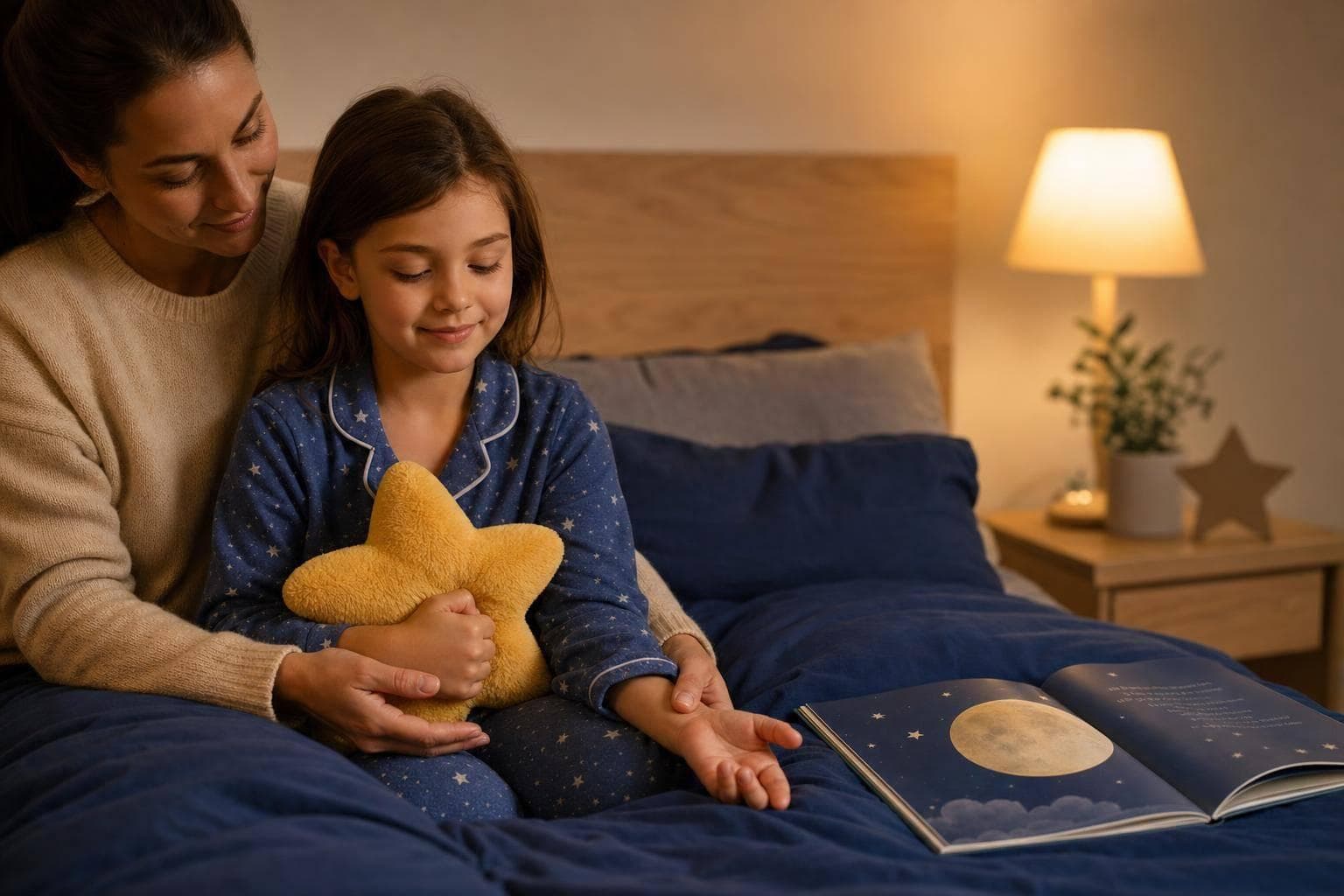
How Progressive Muscle Relaxation Helps with Bedtime Anxiety
If your child seems tired but still can’t settle, progressive muscle relaxation can help lower body tension before sleep. In plain terms, it works by having kids gently tighten and then relax different muscles, which can slow the “on edge” feeling that often shows up at bedtime.
I’d sum up the article like this:
- Bedtime anxiety often shows up in the body first: tight shoulders, clenched hands, fidgeting, or a fast heartbeat.
- PMR gives kids a simple bedtime step: squeeze, then melt.
- Short sessions work best: even 2 minutes can be enough to start the habit.
- It should stay gentle and low-pressure: if a child feels pain or gets upset, stop.
- A calm story after PMR can help keep the mind settled once the body starts to relax.
- Small fixes help if a child gets silly, bored, or wants to quit early.
One reason this matters: sleep problems are common in kids, and anxiety can make them worse. The article’s main point is simple: when the body lets go of tension, sleep often feels less like a fight. I’d read this as a short, practical routine you can try tonight without turning bedtime into more work.
How Progressive Muscle Relaxation Helps the Body Calm Down
When a child’s body is wound up, it helps to show them how to loosen that tension on purpose. Progressive muscle relaxation, or PMR, does exactly that. A child gently tenses one muscle group, then lets it go. That simple shift from tight to loose helps the body settle and feel more ready for sleep.
For children with bedtime anxiety, PMR can ease physical tension and make falling asleep feel less like a struggle. That’s why it works well as a short bedtime routine.
Why PMR Works Well for Anxious Kids at Night
Bedtime anxiety often shows up in the body first. You might notice tight shoulders, clenched hands, fidgeting, or a fast heartbeat. PMR gives kids a simple way to release that tension.
What Parents Should Know Before Trying PMR
Keep it gentle. Use short squeezes, then let the muscles fully relax. If your child feels pain or gets upset, stop the exercise.
sbb-itb-d6d0693
How to Do Progressive Muscle Relaxation at Bedtime
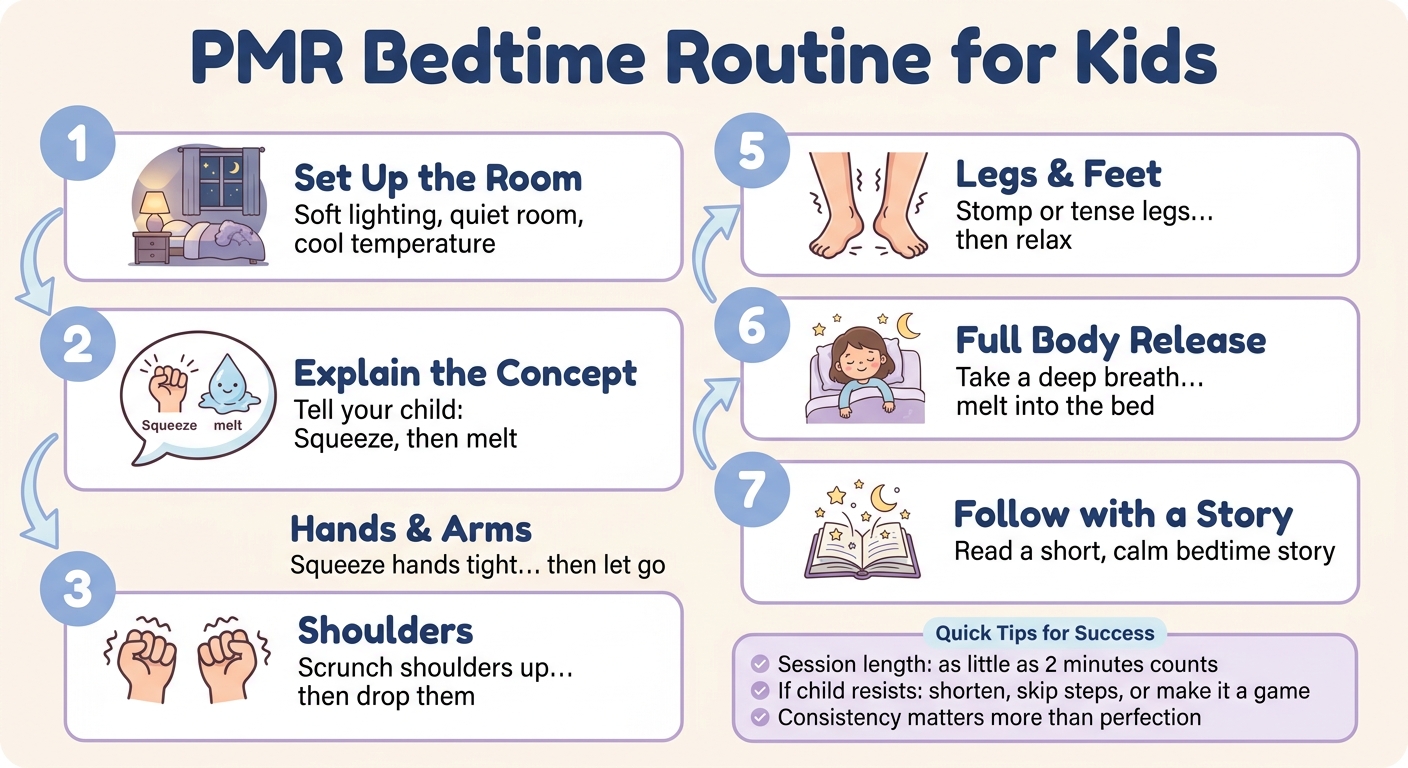
PMR Bedtime Routine for Kids: Step-by-Step Guide
Set Up the Room and Explain the Exercise in Simple Words
Start with soft lighting, a quiet room, and a cool, comfortable temperature. Keep the wording simple: squeeze, then melt. That phrase is easy to follow, especially when someone is tired and ready for sleep.
Once the room feels calm, move into the squeeze-and-release steps.
How to Pair PMR with Bedtime Storytelling
Why a Story After PMR Can Reduce Nighttime Worry
Once PMR has helped the body settle down, the next step is simple: move into a short bedtime story that keeps the mind settled too.
That timing matters. After PMR, your child is often calmer, looser, and more ready for sleep. A short, soothing story can help that calm last a little longer. It gives your child one quiet thing to focus on before sleep without ramping them back up.
Use Kidooki After PMR to Support a Calm Bedtime Pattern

Kidooki works well here because it turns the wind-down into a personalized, low-stimulation story routine. It offers bedtime stories built around a child’s name and interests, and each night brings a new age-appropriate story. Each story also includes gentle narration and calming illustrations.
Put it together like this: PMR first, then a personalized story. That simple sequence can help your child stay relaxed through the rest of bedtime.
Common Problems, Fixes, and Key Takeaways
PMR works best when it stays short, simple, and easy to repeat. The goal isn't a perfect session. It's helping the child get used to the routine without turning it into a battle.
If a child resists, gets goofy, or wants to quit early, small tweaks usually help. You can shorten the session, skip body parts, or turn the steps into a game. A quick “squeeze like a lemon” or “stomp like a giant, then relax” often works better than long instructions.
Timing matters too. Some kids do better when PMR happens before bed. Others need it after school, before homework, or right before a stressful moment. If one time of day falls flat, try another.
It also helps to keep expectations low at first. A two-minute session still counts. So does doing only hands, shoulders, and feet. The habit matters more than doing the full routine every time.
A few simple fixes can make PMR easier:
- If the child gets silly: keep your tone calm and move on without making it a big deal
- If they stop early: end there and try again later instead of forcing it
- If they seem bored: use shorter cues and a bit of imagination
- If they tense too hard: remind them to squeeze gently, not as hard as they can
The big takeaway is pretty plain: PMR usually works better when it feels safe, easy, and low-pressure. Short sessions done often beat long sessions that nobody wants to repeat.
FAQs
At what age can kids try PMR?
The provided information does not say at what age children can start progressive muscle relaxation.
For a calm bedtime routine, Kidooki offers personalized bedtime stories with age-appropriate content, calming illustrations, and professional audio narration.
How long should PMR take at bedtime?
The available information doesn’t say how long progressive muscle relaxation should take at bedtime, so a set time can’t be given.
After your child finishes their relaxation exercises, Kidooki’s personalized bedtime stories can help support a calm, soothing bedtime routine.
What if PMR upsets my child?
If your child gets upset during progressive muscle relaxation, stop right away and reassure them. This should stay voluntary. Pushing can make anxiety worse.
If that happens, shift to a comforting bedtime routine instead. Kidooki’s personalized bedtime stories can give your child a calm, engaging, and predictable way to settle down.