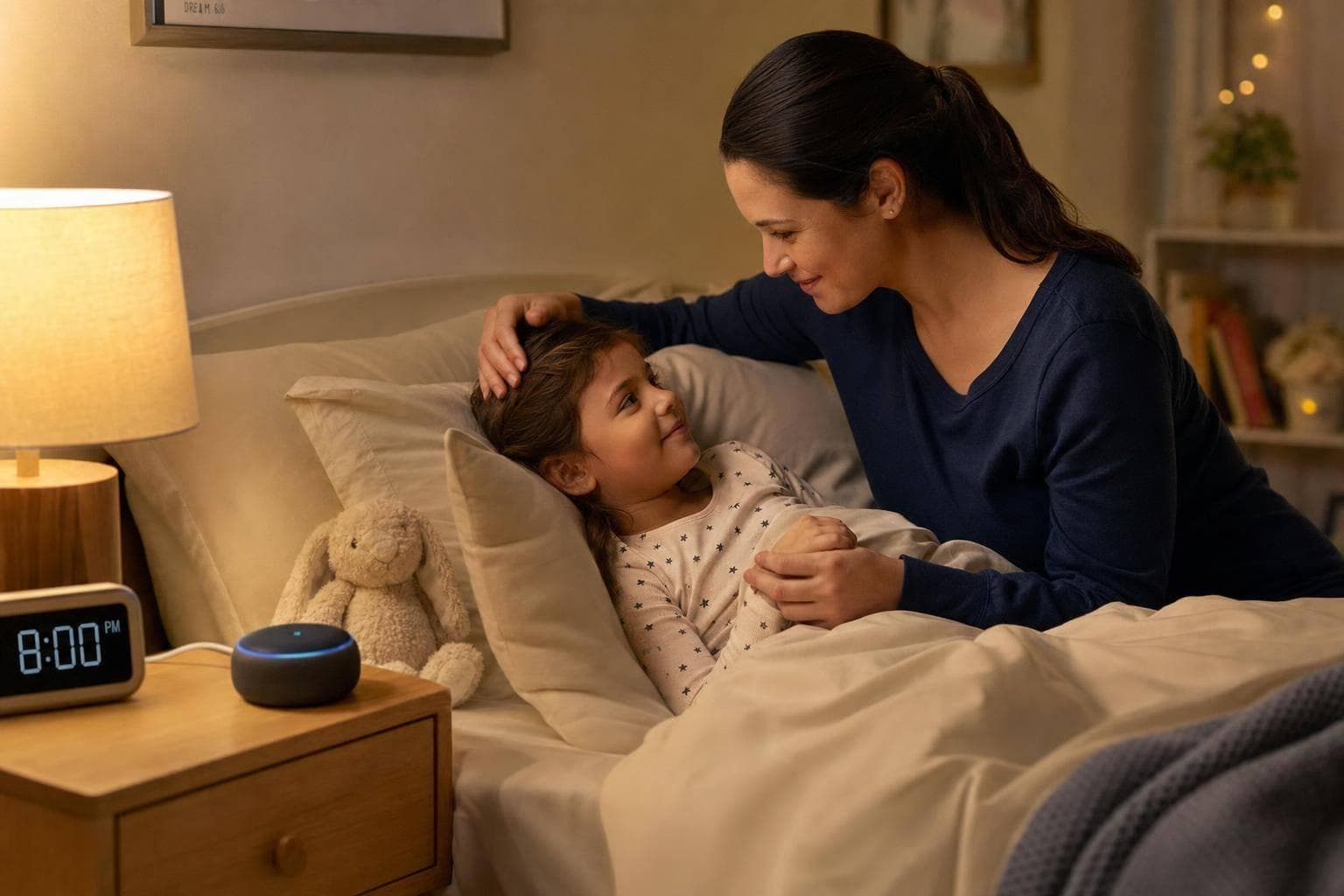
How Audio Bedtime Stories Build Parent-Child Bond
Listening to a bedtime story with your child can make bedtime feel calmer and more connected. It works best when I stay close, keep the routine steady, use small cues like eye contact or a light touch, and ask one short question after the story ends.
Here’s the short version:
- Shared listening matters more than just pressing play.
- A steady bedtime routine can lower stress at night.
- Small actions - like cuddling, a soft voice, and a quick glance - help a child feel safe and noticed.
- A 1- to 2-minute chat after the story can help a child talk about feelings.
- Personalized stories may hold a child’s attention better, especially when they hear their own name.
A few facts help explain why this works. The American Academy of Pediatrics has long pointed to bedtime routines as part of healthy sleep habits. And studies on parent-child interaction show that warm, steady attention supports a child’s sense of safety. In plain terms: when I slow down and share the moment, bedtime often goes better.
What this looks like in practice:
- Sit or lie down together before the story starts
- Listen side by side instead of leaving the room
- Use a hand squeeze, back rub, or cuddle during calm parts
- Keep any comments short and gentle
- Ask one simple question at the end, like “What part did you like best?”
This article is about one simple idea: audio stories build connection best when they are a shared ritual, not just background sound.
How Shared Listening Builds Connection at Bedtime
When a parent and child listen to the same story, bedtime stops feeling like a simple handoff. It starts to feel like a shared moment. That small shift matters. Shared attention can make the whole routine feel calmer, safer, and more connected.
It also changes how the little things land. Eye contact, a gentle touch, and a calm voice often feel more reassuring when both people are settled into the same story.
Shared Attention Helps Children Feel Safe and Seen
Shared attention gives story time a feeling of togetherness. A child isn’t just hearing words in the background. They’re sharing an experience with someone they trust. That can help them feel seen and secure, which often sets the tone for a smoother bedtime.
When a child feels noticed, the rest of the routine usually gets easier. There’s less distance in the moment, and more of a sense that we’re here together.
A Consistent Story Routine Lowers Stress at Night
A steady story routine gives bedtime a clear cue. It tells a child, in a simple and familiar way, that the day is winding down. That predictability can make it easier to settle in and let go of some of the stress that tends to show up at night.
Over time, the pattern itself starts to do some of the work. Same kind of moment, same rhythm, same signal: it’s time to rest.
sbb-itb-d6d0693
The Behaviors That Make Audio Storytime a Bonding Moment
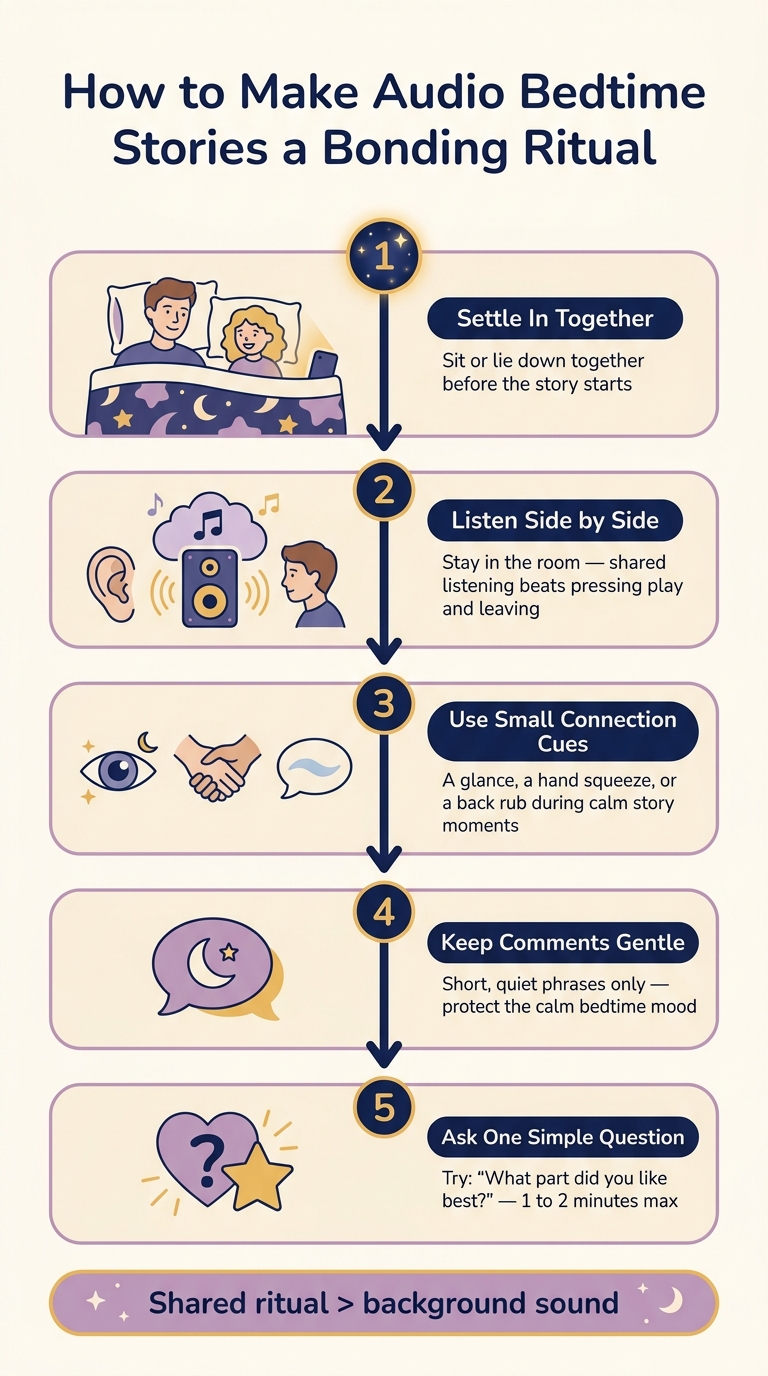
How to Make Audio Bedtime Stories a Bonding Ritual
When you listen together, small cues from a parent can make the story feel a lot more personal. A quick glance, a hand on your child’s shoulder, or a soft word can help them feel close to you. In those little moments, eye contact, touch, and voice turn audio storytime into a shared bedtime ritual.
Eye Contact During Key Story Moments
You don’t need to look at your child the entire time. In fact, that’s not the point.
A brief glance during a funny, tender, or sleepy part of the story can reassure them and show that you’re right there with them. It keeps the connection going without breaking the flow of the audio.
Touch and Cuddling Support Calm and Closeness
Physical closeness during storytime doesn’t need to be elaborate. Simple things often do the job best.
Sitting shoulder-to-shoulder, holding hands, rubbing your child’s back, or cuddling under a blanket can help children feel safe and close. It’s a small thing, but it can set the tone for a calmer bedtime.
Calm Voices Keep the Bedtime Mood Gentle
If you say something during the story, keep your voice calm and brief. Short, gentle phrases help the mood stay quiet and reassuring.
After the story ends, a short chat can deepen that sense of connection.
Together, these small cues help keep bedtime calm and connected.
Short Chats After the Story Help Children Open Up
After shared listening, a short check-in helps bedtime feel close and connected. Keep it to a minute or two so the mood stays calm and sleep doesn't get pushed back.
When the story ends, pause before lights out and ask one quick question. That's often enough to help your child share a feeling or link the story to their day, without making it harder to settle down.
Ask One or Two Simple Questions After the Story
Ask one simple question.
Try something easy, like what they liked best or how the character felt. Keep it casual and warm. That gives your child room to answer without turning bedtime into a big conversation.
If they stay quiet, that's okay. A simple acknowledgment is enough.
Connect Story Feelings to Real Life in a Gentle Way
One of the easiest ways to make these chats more meaningful is to connect the story to your child's day. You might ask whether a character's feelings reminded them of something that happened earlier.
These small conversations help children link story feelings to real life. Over time, that gentle habit can make it easier for them to talk about emotions.
How to Build This Routine with Personalized Audio Stories
Why Personalization Keeps Children Engaged at Bedtime
When a child hears their own name in a story, they often pay closer attention. It feels more personal. And when the story matches their age and interests, they're more likely to lean in instead of drift off mentally.
That added focus makes it easier to stay connected during the story. You're not fighting for their attention. You're sharing a moment they already want to be part of. That's a big reason personalized stories can feel easier to settle into together.
Using Kidooki as Part of a Calm Nightly Ritual
For families who want a built-in way to support that habit, Kidooki can help. Kidooki creates personalized bedtime stories with a child's name, interests, age-appropriate content, and professional narration.
Parents can set up separate profiles for each child. So if siblings have different ages or like different things, each one can get a story that fits. You can also save favorite stories and play them again later, which can be a big help for younger children who find comfort in repetition.
A simple routine can look like this:
- Settle in together before the story starts
- Stay close while listening
- Share a look or a gentle squeeze when the moment feels right
- Ask one easy question when the story ends
Small Bedtime Moments Can Build a Stronger Bond
The bond doesn't come from doing anything fancy. It comes from being there and listening together. Personalized stories can help children stay engaged night after night, which makes the routine easier to repeat and easier to keep going over time.
FAQs
What if my child wants to listen alone?
If your child likes listening on their own, you can still be part of the experience. A simple way to stay connected is to ask about their favorite part afterward. That small check-in can gently link solo listening back to your relationship.
With Kidooki, parents can save favorite stories and set up personalized profiles. That makes it easier to stay in the loop and have short follow-up chats later.
How long should an audio bedtime story be?
The available information does not give an ideal length for an audio bedtime story.
It only says that story length is not addressed in the available results.
What if my child doesn’t answer after the story?
That’s okay. The goal is connection and shared attention, not a spoken reply. Kids take in stories in different ways, and simply listening side by side can still create a calm, shared moment.
You can gently ask an open-ended question, but keep it low-pressure. If they stay quiet, cuddling or sitting together in peace is still a meaningful way to end the experience and support your bond.